Grape Tomatoes: The Tiny Tomato That Changed the Way We Snack, Cook, and Shop
They look like miniature grapes, but their thicker skins, concentrated sweetness, and surprising commercial history explain why grape tomatoes became a supermarket staple.

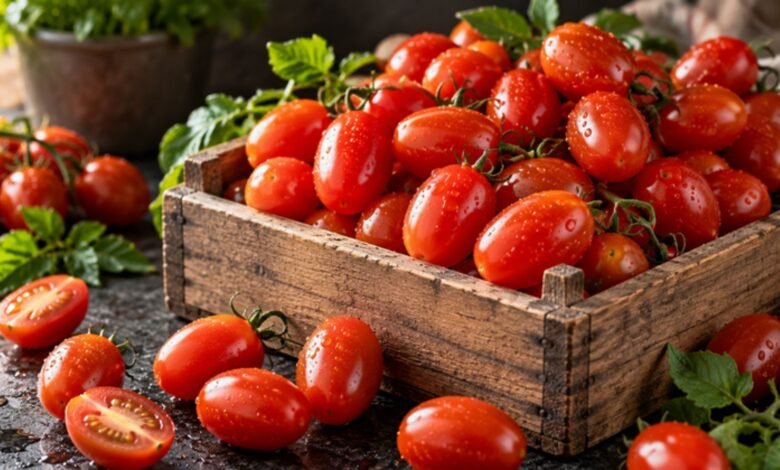
Walk into almost any modern produce aisle and you will find them beside salad greens, herbs, peppers, and larger tomatoes: small, red, oblong, easy to grab by the handful. Grape tomatoes appear almost too ordinary to deserve a second look.
That is precisely what makes them interesting. Unlike the familiar round tomato, grape tomatoes were shaped by a very particular combination of breeding, texture, transportability, sweetness, and consumer convenience. Their rise in the United States is closely tied to the Santa F1 tomato and the commercial work of Florida grower Andrew Chu in the 1990s.
And there is a second reason they matter now: grape tomatoes sit at the intersection of nutrition and practicality. They deliver vitamin C, potassium, fiber, carotenoids, and lycopene in a small, low-calorie package, while their firmer flesh makes them unusually useful raw, roasted, grilled, or tossed into quick weeknight dishes.
BLUF: Grape tomatoes are small, typically oblong tomatoes prized for their firm texture, sweet flavor, relatively thick skin, and convenience. They belong to Solanum lycopersicum and are closely related to cherry tomatoes. Their commercial rise in the United States accelerated in the 1990s, particularly through the Santa F1 cultivar.
The small tomato class that looks like fruit from another aisle
A grape tomato is not a completely separate tomato species. It belongs to the same cultivated tomato species, Solanum lycopersicum, as the much larger tomatoes sold for slicing, sauces, and sandwiches.
What sets grape tomatoes apart is primarily their size and shape.
North Carolina State University describes them as true tomatoes about the size of cherry tomatoes or smaller, with an elongated, grape-like form. Its historical report notes fruits around 1 inch long and three-quarters of an inch wide.
The University of Florida’s gardening guidance makes the classification even more interesting: round and elongated cherry tomatoes are both part of the same plant species, with elongated types sometimes called grape tomatoes.
That means “grape tomato” is best understood as a commercial and horticultural type rather than one single universal cultivar.
What you notice when you bite one
The defining sensory difference is texture.
Grape tomatoes generally have:
| Characteristic | Grape tomatoes |
|---|---|
| Shape | Oblong, oval, grape-like |
| Size | Small and bite-sized |
| Skin | Relatively firm |
| Flesh | Meaty and dense |
| Juice | Less free liquid than many cherry tomatoes |
| Flavor | Sweet, tomato-forward, often mildly tangy |
| Common uses | Snacking, salads, roasting, pasta, skewers |
| Storage advantage | Generally hardier than softer cherry types |
Illinois Extension describes grape tomatoes as oblong, while noting that thicker skins make them easier to pack and transport than cherry tomatoes. Kentucky Extension similarly describes grape tomatoes as meatier and chewier, with a longer shelf life than cherry tomatoes.
That durability is not a minor detail. It is one of the reasons this tomato type became commercially successful.
Grape tomatoes and cherry tomatoes are cousins, not interchangeable clones
The supermarket often places them side by side, and many recipes use the names almost interchangeably. But the eating experience can be quite different.
Cherry tomatoes are generally rounder, juicier, and softer. Grape tomatoes are usually more elongated, firmer, and meatier. Illinois Extension notes that grape tomatoes may be less juicy and less sweet than cherry tomatoes, although specific cultivars vary.
Serious Eats reaches a similar conclusion, emphasizing the rounder, juicier character of cherry tomatoes compared with the thicker skin and sturdier structure of grape tomatoes.
The distinction becomes especially useful in cooking.
A cherry tomato is excellent when you want juice to burst into a pan or sauce. A grape tomato is often the better choice when you need a piece of tomato to retain its shape.
Grape, cherry, and Roma at a glance
| Tomato type | Shape | Texture | Typical strength in the kitchen |
|---|---|---|---|
| Grape | Oblong | Firm, meaty | Snacking, roasting, salads |
| Cherry | Round | Tender, juicy | Fresh salads, sauces, roasting |
| Roma/plum | Oval | Thick-walled, meaty | Sauce, paste, canning |
| Beefsteak | Large, usually round | Soft and fleshy | Slicing, sandwiches |
Penn State Extension describes Roma and San Marzano types as paste tomatoes with thick flesh, small seed cavities, and comparatively little gel, making them especially useful for sauces and processing.
So while grape and cherry tomatoes can often substitute for each other, neither is a perfect replacement for a traditional paste tomato.
The surprising 1990s story behind a supermarket staple
The tomato itself has an ancient history. Cultivated tomato traces lead back to the Americas, with domestication associated especially with Mexico, while its wild relatives are native to western South America. USDA research identifies Solanum lycopersicum as the correct modern scientific name and describes the tomato botanically as a berry.
The modern grape tomato, however, has a much newer commercial history.
The U.S. market story is closely linked to Florida grower Andrew Chu. According to contemporary Washington Post reporting, Chu received grape-shaped tomato seed from Taiwan after a contact suggested the fruit might appeal to Asian consumers. He planted his first crop in Florida in 1996. The following year, he began shipping the tomatoes in pint-sized containers to East Coast distributors.
The variety widely associated with that story was Santa F1, developed through traditional breeding by Known-You Seed Company in Taiwan. The Brooklyn Botanic Garden’s historical account identified Santa F1 as the hybrid commonly seen in stores at the time and described its development and introduction to the United States.
Santa Sweets, which commercialized the variety, still identifies its Santa F1 grape tomato as the foundation of the company and says the variety was the first grape tomato distributed nationwide in the United States.
Why the shape mattered commercially
It was not simply a case of consumers deciding that small tomatoes looked cute.
Grape tomatoes solved practical retail problems.
Their firm skins helped them survive packing and transport. Their compact size made them convenient to eat without slicing. Their sweetness increased their appeal as a snack. And their oblong shape gave retailers a clearly recognizable category distinct from round cherry tomatoes.
That combination gave grape tomatoes a strong advantage: they were both produce and convenience food.
Their nutrition is modest in calories but dense in useful nutrients
Grape tomatoes are not a miracle food, but they fit easily into a nutrient-rich diet.
A University of Maryland nutrition label for a 1-ounce serving of grape tomatoes lists approximately:
| Nutrient | Per 1 oz serving |
|---|---|
| Calories | 5.1 kcal |
| Carbohydrate | 1.1 g |
| Fiber | 0.3 g |
| Sugars | 0.7 g |
| Protein | 0.2 g |
| Fat | 0.1 g |
| Vitamin C | 3.6 mg |
| Potassium | 67.2 mg |
| Vitamin A, RE | 23.8 mcg |
The university notes that nutrient composition can vary with genetics, growing conditions, processing, and preparation.
Tomatoes as a broader food category also provide vitamin C, potassium, fiber, and carotenoids including lycopene and beta-carotene. USDA’s WIC resource specifically lists tomatoes as sources of fiber and potassium and notes their vitamin C, vitamin A, and lycopene content.
Lycopene is the nutrient story worth understanding
The bright red color of ripe tomatoes is closely associated with carotenoids, particularly lycopene. Unlike vitamin C, lycopene is fat-soluble, which helps explain why preparation can influence how much the body absorbs.
Research in humans has repeatedly found that processing and heating tomatoes can increase lycopene bioavailability. One controlled study found that diced tomatoes cooked with olive oil produced substantially higher plasma lycopene concentrations than tomatoes cooked without oil.
That does not mean raw tomatoes are “bad” or that cooked tomatoes are automatically superior. It means the form in which a tomato is eaten can affect nutrient availability.
The broader cardiovascular evidence is more complicated than many social-media claims suggest. A 2026 umbrella review found evidence of a blood-pressure benefit from tomato-derived lycopene, while lipid findings were inconsistent; other systematic reviews have reached more mixed conclusions.
The sensible takeaway is simple: grape tomatoes are a useful whole-food source of nutrients, but they should not be marketed as a treatment for a disease.
Why grape tomatoes are unusually good for roasting
This is where their physical structure becomes a culinary advantage.
A grape tomato has enough firmness to withstand heat without instantly collapsing. Roasting concentrates its sugars and alters its moisture, creating a sweeter, more intense tomato flavor.
Try them:
- On a sheet pan with olive oil, garlic, and herbs
- Tossed through pasta after roasting
- Alongside peppers and onions
- On skewers with courgette or halloumi
- Scattered over flatbreads
- Folded into grain bowls
- Served warm over toasted sourdough
- Added to scrambled eggs or frittatas
Their small size also reduces preparation time. You can often roast them whole and halve them only when a recipe calls for it.
For raw dishes, their firmness helps prevent a salad from becoming watery too quickly.
That makes them particularly useful in lunch boxes, picnic salads, pasta salads, Mediterranean-style bowls, and quick sandwiches.
Buying grape tomatoes: color, firmness, and damage matter more than size
When shopping, the goal is not to find the hardest tomato possible.
Look for tomatoes with bright, even coloration, intact skins, and firm flesh. Avoid packages containing significant bruising, leaking juice, mold, or collapsed fruit. USDA guidance recommends choosing tomatoes without bruises or visible damage, while Oregon State Extension advises looking for bright color and tomatoes that feel firm but yield slightly under gentle pressure.
Stem appearance can be useful but is not the only quality signal. Aroma, skin condition, firmness, and ripeness tell you more about how the tomatoes are likely to perform in the kitchen.
For fresh eating, a tomato with a little give is generally preferable to one that feels completely hard.
The storage mistake that quietly ruins good tomatoes
Grape tomatoes can last relatively well compared with fragile cherry tomatoes, but storage temperature still matters.
USDA’s WIC guidance says whole fresh tomatoes should generally be stored at room temperature and used within about seven days after reaching ripeness. It recommends refrigerating sliced tomatoes and using them within three to four days.
This distinction matters because cold storage can reduce tomato quality and flavor.
Once grape tomatoes are cut, the situation changes. FDA guidance recommends refrigerating cut tomatoes because fresh-cut produce requires temperature control to reduce food-safety risks.
The practical routine is therefore:
Whole and ripe: keep them at room temperature for best quality.
Cut: refrigerate promptly.
Bought pre-cut or packaged: follow the package refrigeration instructions.
And wash fresh tomatoes under running water before eating or cutting. FDA specifically advises against using soap or detergent on produce.
Growing grape tomatoes at home is easier than their supermarket history makes them seem
Grape tomatoes can be grown in containers, raised beds, or garden soil, although the exact cultivar determines growth habit.
Oregon State Extension lists grape cultivars such as ‘Sweet Mojo’ and ‘Smarty’ among home-garden options, with grape tomatoes available in both indeterminate and semi-determinate types.
General tomato requirements are straightforward:
| Growing factor | Useful target |
|---|---|
| Direct sun | At least 6 hours daily |
| Soil | Fertile, well-drained |
| Water | About 1–1½ inches per week |
| Preferred daytime temperatures | Around 70–80°F |
| Cold sensitivity | Frost can kill plants |
| Support | Cage, stake, or trellis for many cultivars |
| Mulch | Helpful for moisture conservation |
Penn State Extension recommends at least six hours of direct sun, fertile well-drained soil, consistent moisture, and support for tomato plants. It also warns that fluctuations in water availability can contribute to cracking and blossom-end rot.
The biggest mistake is usually uneven watering
Tomatoes do not appreciate dramatic swings between drought and heavy watering.
Penn State notes that consistent moisture helps reduce blossom-end rot and fruit cracking, while excess or suddenly increased water availability can increase cracking.
That is especially relevant to grape tomatoes because their small fruits can develop quickly in clusters, making irrigation consistency important during heavy fruit production.
A simple timeline from Taiwan seed to supermarket staple
1990s — Development and spread: The commercial grape tomato story takes shape around Taiwanese breeding and the Santa F1 cultivar.
1996 — Florida trial: Andrew Chu plants grape-shaped tomato seed obtained from Taiwan.
1997 — East Coast distribution: Chu Farms begins shipping the fruit to distributors in pint-size packs.
Late 1990s — Commercial expansion: Major produce companies begin recognizing the tomato’s retail potential.
2000s — Mainstream acceptance: Grape tomatoes move beyond niche markets and become a standard supermarket category.
Today — Multiple cultivars: Home gardeners and commercial growers have access to numerous grape-type cultivars with different colors, maturity dates, and growth habits.
The smartest way to use grape tomatoes depends on what you want from them
Use them raw when you want crunch, freshness, and speed.
Use them roasted when you want sweetness and concentration.
Use them in a skillet when you want their juices to become part of a sauce.
Use cherry tomatoes instead when maximum juiciness and a softer texture are the priorities.
Use Roma or another paste tomato when you need dense flesh and reduced seed gel for sauce or preservation.
That is the real advantage of knowing tomato types: the “best” tomato is determined by the job it has to perform.
People Also Ask About Grape Tomatoes
What are grape tomatoes?
Grape tomatoes are small, usually oblong tomatoes known for firm flesh, relatively thick skins, and a sweet, concentrated flavor. They belong to Solanum lycopersicum, the same cultivated species as conventional slicing tomatoes and cherry tomatoes. Their grape-like shape and sturdy texture distinguish them most clearly in everyday cooking and retail use.
Are grape tomatoes healthier than cherry tomatoes?
Grape tomatoes are not categorically healthier than cherry tomatoes. Both can contribute vitamin C, potassium, fiber, carotenoids, and other nutrients to the diet. The main differences are shape, texture, juiciness, sweetness, and cultivar-specific nutrient composition. A varied diet can comfortably include either type.
Can you eat grape tomatoes raw?
Yes. Grape tomatoes are commonly eaten raw because they are small, firm, and convenient. They work especially well in salads, lunch boxes, grain bowls, sandwiches, and as a snack. FDA recommends washing fresh produce thoroughly under running water before eating or cutting it.
Do grape tomatoes need to be refrigerated?
Whole ripe grape tomatoes are generally best kept at room temperature for quality and flavor. USDA guidance recommends room-temperature storage for whole fresh tomatoes and refrigeration for sliced tomatoes. Cut tomatoes should be refrigerated promptly because fresh-cut produce presents greater food-safety concerns.
Are grape tomatoes good for cooking?
Yes. Their firmer structure makes grape tomatoes especially good for roasting, grilling, skewering, sautéing, and adding to pasta. They tend to hold their shape better than softer cherry tomatoes, while heating can concentrate their sweetness. Cooking tomatoes with a source of fat can also improve lycopene bioavailability.
Where did grape tomatoes come from?
The modern commercial grape tomato category is strongly associated with late-20th-century Southeast Asian breeding, particularly the Santa F1 cultivar linked to Known-You Seed Company in Taiwan. Florida grower Andrew Chu helped introduce the tomato to broader U.S. markets in 1997 after planting Taiwanese seed in Florida the previous year.
Are grape tomatoes genetically modified?
Grape tomatoes are not automatically genetically modified simply because they are hybrids. The Santa F1 tomato associated with the commercial origin story was produced through conventional breeding rather than genetic engineering. Individual products should still be evaluated according to their own cultivar and labeling information.
The little tomato that won by being practical
Grape tomatoes did not become popular because they were simply smaller versions of a familiar vegetable.
They solved several problems at once.
They were small enough to snack on, firm enough to transport, sweet enough to appeal to children and adults, and versatile enough to move between raw and cooked dishes without much preparation. Their commercial rise in the 1990s turned those physical characteristics into a durable retail advantage.
Their nutritional profile adds another layer: they contribute vitamin C, potassium, fiber, and carotenoids without adding many calories. Their lycopene story becomes particularly interesting when heat and dietary fat enter the picture.
The next time a pint of grape tomatoes lands in your basket, the important question is not whether they are “better” than every other tomato.
It is what you need the tomato to do.
For crisp snacking, quick salads, roasting, and weeknight cooking, the little oblong tomato has already made its case.
Related Reading on Global Nova
Supermaked Looks Like a New Retail Term—But the Search Trail Tells a Different Story — a related Global Nova investigation into grocery terminology, consumer search behavior, and the difference between familiar-sounding food and retail language and what the evidence actually establishes.
Sources & Verification
- North Carolina State University Extension — Evaluating New Lines of Grape Tomatoes, including grape tomato size, texture, growth characteristics, and historical cultivar information. NC State Extension grape tomato report
- University of Florida IFAS — Cherry Tomatoes, explaining round and elongated cherry/grape forms and tomato growth habits. University of Florida tomato guide
- University of Illinois Extension — Is it a Grape or Cherry Tomato?, covering texture, shape, transportability, and culinary interchangeability. Illinois Extension grape vs. cherry tomatoes
- U.S. Department of Agriculture Agricultural Research Service — tomato taxonomy, domestication, fruit biology, and the species Solanum lycopersicum. USDA ARS tomato research
- USDA WIC Works — tomato nutrition, choosing, storage, preparation, and safe handling guidance. USDA WIC tomato guidance
- U.S. Food and Drug Administration — fresh produce washing, storage, and cut-tomato food-safety guidance. FDA produce safety guidance
- Penn State Extension — tomato growing conditions, watering, support, diseases, cracking, and blossom-end rot. Penn State tomato growing guide
- Oregon State University Extension — tomato types and cultivar information, including grape tomatoes. Oregon State tomato growing guide
- Washington Post archive — contemporary reporting on Andrew Chu, the 1996 Florida planting, and the 1997 U.S. distribution of grape tomatoes. Washington Post grape tomato history
- Brooklyn Botanic Garden — historical account of the Santa F1 grape tomato and its Taiwanese breeding background. Brooklyn Botanic Garden grape tomato history
- PubMed — human studies and systematic reviews addressing tomato lycopene bioavailability and cardiovascular evidence. PubMed lycopene research
Editorial Disclaimer
This article is intended for general food, nutrition, gardening, and culinary information. Nutrient values can vary by cultivar, growing conditions, brand, ripeness, and preparation. Research concerning lycopene and health outcomes does not establish grape tomatoes as a treatment or cure for disease. Food-safety instructions should follow current guidance from the FDA, USDA, or the relevant authority in your country.



One Comment