Suzanne McFayden: The Story Beyond Robert F. Smith’s Ex-Wife
She entered public attention through one of America’s most closely watched billionaire marriages, but her documented life after that marriage tells a far more interesting story.


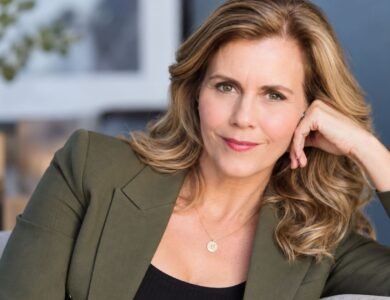
Suzanne McFayden is often introduced in search results with a single relationship label: Robert F. Smith’s former wife. That description is accurate, but incomplete. By 2026, McFayden has built a public profile around writing, contemporary art collecting, philanthropy and cultural institutions rather than celebrity itself.
That distinction matters now because her name has resurfaced in major cultural coverage. In April 2026, Zeitz MOCAA announced Suzanne McFayden Smith as a new member of its Global Council. In August 2026, the Jamaica Observer revisited her personal and artistic evolution as she entered what she described as her “third act,” following the graduation of her youngest child and the sale of her former Austin residence.
Her story also carries a distinctly transatlantic thread: Kingston, Jamaica; Cornell University; Mills College; Austin; New York; and an art collection centred heavily on artists whose work explores Black identity, women’s experiences and cultural memory.
BLUF: Suzanne McFayden is a Jamaican-born author, contemporary-art collector and philanthropist who was married to investor Robert F. Smith from 1988 until their divorce was finalised in 2014. Her personal net worth has not been authoritatively disclosed, while her current public profile is documented through writing, museum leadership, philanthropy and international arts patronage.
Suzanne McFayden at a Glance
- Known publicly as: Suzanne McFayden; the name Suzanne McFayden Smith also appears in current institutional material.
- Birthplace: Kingston, Jamaica.
- Education: BA in French Literature from Cornell University; MFA in Writing from Mills College.
- Writing: Her work has appeared in publications including The New York Times and Kweli Literary Journal.
- Art: Collector of modern and contemporary art, with a strong emphasis on Black and female artists.
- Philanthropy: Her stated interests include expanding opportunity for women and children and addressing food insecurity.
- Museum roles: Trustee of the Studio Museum in Harlem and former chair of the Blanton Museum of Art’s National Leadership Board.
- Family: She and Robert F. Smith have three children together.
- Current cultural role: Named to the Zeitz MOCAA Global Council in April 2026.
Kingston to Cornell: The Education Behind McFayden’s Public Life
McFayden was born and raised in Kingston, Jamaica, a detail consistently stated across her official biography, museum profiles and current international cultural biographies. Her own writing also shows that Jamaica is not simply a biographical footnote; it remains central to the way she thinks about family, migration, history and identity.
Her father, Vincent Bancroft McFayden, was part of the Windrush generation. In an essay published on her website about England in 1977, McFayden recalls his longing to revisit Britain and reflects on the history carried by Caribbean families whose lives were shaped by migration between Jamaica and Britain.
She later attended Cornell University, where she earned a BA in French Literature. McFayden subsequently pursued an MFA in Writing at Mills College. Her academic choices help explain the combination that became characteristic of her later public work: literary writing, historical inquiry, visual culture and a strong interest in how identity is represented.
Writing was never merely an accessory to her public identity. Her official biography states that she received a Hedgebrook Writer in Residence place in 2009 and returned as an alumna in 2020. The Texas Book Festival also describes her as an author whose writing has appeared in The New York Times and Kweli Literary Journal.
That record is important because it establishes McFayden independently of her marriage. Her literary career is documented by institutions that have featured or hosted her, rather than by celebrity-family websites alone.
The Robert F. Smith Marriage That Put Her Name Into the Financial Press
McFayden met Robert F. Smith while they were students at Cornell University. They married in 1988 and had three children. Contemporary reporting and later profiles place the end of the marriage in the early 2010s, with the divorce finalised in 2014.
The separation became more significant because of the scale of Smith’s business interests. Smith founded Vista Equity Partners in 2000 after careers in engineering and investment banking, eventually becoming one of the best-known figures in private equity. His official biography identifies him as Vista’s chairman and CEO and documents his later philanthropic commitments.
McFayden’s divorce became public during a period when Smith’s wealth and business affairs were receiving increasing scrutiny. A 2021 Forbes investigation reported that McFayden’s divorce petition sought extensive financial accounting and support-related provisions, illustrating how closely the personal dispute intersected with the financial structure surrounding Smith.
Al Jazeera likewise reported that McFayden filed for divorce in the period when Smith’s personal life was attracting scrutiny, describing her as a Jamaican-born woman who had met Smith at Cornell and noting that the couple had three children.
But the public record should not be stretched beyond what it establishes. Detailed settlement figures, a definitive personal fortune for McFayden, or a comprehensive accounting of assets awarded to her are not reliably available in authoritative public sources.
Also Read About Gerald Mwangi: The Private Businessman Behind Shamea Morton’s Life in the Spotlight
The Three Children Who Connected Two Very Different Public Worlds
McFayden and Smith have three children together. Established profiles identify two daughters, Zoë and Eliana, and a son, Maximos Robert Smith, although naming conventions vary across secondary sources. Cultured specifically documented Zoë and Eliana in a 2021 feature about McFayden’s art collection and family life.
McFayden has largely resisted turning her children into a public spectacle. Her own writing, however, occasionally approaches motherhood directly. One essay, “Teaching My Kids to Drive While Black,” examines the anxieties that accompany raising Black children in America and the lessons she wanted them to carry into adulthood.
That writing offers more insight into her worldview than a list of celebrity-family associations ever could.
Divorce Changed the Address, Not the Direction
One of the most revealing chapters in McFayden’s life came after the marriage ended.
Architectural Digest profiled the Austin property she bought and transformed after the divorce, describing a 7,000-square-foot Brutalist residence in the hills west of Austin that became a physical statement of independence. The project involved architects Paul Lamb and Ted Young and interior designer Jennifer Vaughn Miller.
The significance of the house was personal as much as architectural.
McFayden used the property to create an environment organised around her own preferences and art collection. Architectural Digest reported that she described the project as a response to the loss of a previous home and a desire to build a place reflecting her own character.
The house also revealed the extent to which collecting had become central to her life.
Works associated with the residence included pieces by artists such as Awol Erizku, while later coverage of her collection has highlighted artists including Carrie Mae Weems, Sanford Biggers, Tschabalala Self and Frida Orupabo.
In 2026, McFayden moved again. The Jamaica Observer reported in August that she had sold the Austin Brutalist residence and created a new, more intimate home designed around what she now wanted from life: comfort, reflection and enough wall space for her expanding art collection.
That transition is more than an interiors story. It marks a shift from the post-divorce reinvention of the mid-2010s to the quieter, more established cultural identity she occupies today.
Her Art Collection Became a Form of Personal History
McFayden’s collecting philosophy is unusually explicit.
On her own website, she describes her collection as focused on works that reflect identities including woman, Black, mother, immigrant, traveller, survivor and writer. Her comments to Cultured similarly describe art collecting as a way of assembling personal and historical fragments.
The collecting is also visible in institutional records.
The Studio Museum in Harlem lists McFayden as a trustee, and its collection records show her participating in funding acquisitions. For example, the museum’s purchase of Naudline Pierre’s A Source of Power and Guardian (in Yellow) credits McFayden among the acquisition supporters.
Her support for contemporary art has also extended to exhibitions at the Blanton Museum of Art in Austin. The museum records McFayden as a board member since 2016 and notes her continued support for the Contemporary Project programme.
She has helped fund particular exhibitions too. The Blanton identifies Suzanne McFayden as a funder of Diedrick Brackens’s darling divined and lists her among the major supporters of Clarissa Tossin’s Encontro das águas.
This is where her biography becomes much clearer. She is not simply a wealthy person buying art. Her public institutional record shows a collector who has used patronage to support museums, exhibitions and artists whose work aligns with her stated interest in Black history, representation and cultural memory.
From Blanton Leadership to a New International Cultural Role
McFayden’s institutional involvement reached a significant point when the Blanton Museum named her chair of its National Leadership Board. The museum announced that she had joined the board in 2015 and moved into the chairmanship after previously serving as vice chair.
Her contribution was not restricted to fundraising.
The museum highlighted her involvement in exhibitions, educational programmes, the Contemporary Project series and the wider effort to broaden the museum’s cultural reach. McFayden herself emphasised the ability of art to connect people across communities and demographics.
Her later profile at the Texas Book Festival describes her as the immediate past chair of the Blanton and a trustee of the Studio Museum in Harlem.
Then came a new international role.
On April 30, 2026, Zeitz MOCAA announced Suzanne McFayden Smith as a new member of its Global Council. The museum described the council as an international network of artists, curators, philanthropists and business leaders supporting the institution’s mission around contemporary art from Africa and its diaspora.
The appointment is particularly significant given McFayden’s Jamaican background and her long-standing interest in Black artistic histories. It connects her Caribbean heritage, American life and collecting activities with an institution explicitly dedicated to contemporary African art and the diaspora.
The 2026 “Third Act” Is About Identity, Not Reinvention
The phrase “third act” comes directly from McFayden herself.
In August 2026, the Jamaica Observer reported that her youngest child had graduated from college in the spring, making McFayden an empty nester. She subsequently sold her former 7,000-square-foot Austin residence and worked with architect Paul Lamb and designer Jennifer Vaughn Miller on a new home.
Recent Architectural Digest coverage gives the same basic picture: a move towards a smaller, more intimate residence shaped around her current stage of life and the art she has accumulated over the years.
The change also shows how little her public identity depends on Robert F. Smith today.
That marriage explains why millions of people first encounter the name Suzanne McFayden. Her current cultural record explains why the name continues to appear independently: museum governance, writing, philanthropy, collecting, exhibition sponsorship and international cultural patronage.
A Brief Timeline of the McFayden Record
| Year / Period | Documented development |
|---|---|
| Childhood | Born and raised in Kingston, Jamaica. |
| 1980s | Studied French Literature at Cornell University. |
| 1988 | Married fellow Cornell alumnus Robert F. Smith. |
| Family years | Raised three children with Smith. |
| 2009 | Selected for a Hedgebrook Writer in Residence programme. |
| 2014 | Divorce from Robert F. Smith finalised. |
| 2015 | Joined the Blanton Museum of Art board. |
| 2016 onward | Became increasingly involved in contemporary-art exhibitions and institutional support at the Blanton. |
| 2020 | Returned to Hedgebrook as an alumna. |
| 2021 | Took on the Blanton National Leadership Board chair role. |
| 2021–2025 | Continued visible activity as an art collector, museum supporter and writer. |
| April 2026 | Named to the Zeitz MOCAA Global Council. |
| Spring 2026 | Youngest child graduated from college, according to the Jamaica Observer. |
| August 2026 | Jamaica Observer profiled her “third act” and new Austin home. |
Suzanne McFayden Net Worth: What the Public Record Can Actually Support
The most frequently requested financial question is straightforward: what is Suzanne McFayden’s net worth?
The responsible answer is that there is no authoritative, independently verified figure for Suzanne McFayden’s personal net worth available in the public record reviewed for this article.
That absence matters because numerous celebrity-biography websites publish precise dollar estimates without providing audited accounts, property schedules, investment statements, tax records or court documents that substantiate those totals.
McFayden clearly operates within the world of substantial private wealth. Her documented activities include collecting contemporary art, owning architecturally significant property, supporting major cultural institutions and participating in international philanthropic networks. But those facts do not establish a precise personal fortune.
The same caution applies to attempts to calculate her net worth from Robert F. Smith’s wealth.
Smith’s financial position is separately documented because of his ownership and leadership interests in Vista Equity Partners and extensive philanthropic activity. His official biography says he joined the Giving Pledge in 2017 and committed a majority of his net worth to charitable giving during his lifetime.
That does not mean the value of Smith’s fortune can simply be transferred to McFayden as an estimate of her own wealth.
The divorce record contains references to financial disputes and accounting requests, but public reporting does not provide a reliable, comprehensive balance sheet showing McFayden’s current assets, investments, settlement proceeds or liabilities.
Financial Snapshot
| Measure | What can be verified |
|---|---|
| Personal net worth | Not authoritatively disclosed |
| Annual income | Not publicly verified |
| Investment portfolio | Not publicly disclosed in full |
| Art collection value | No authoritative total published |
| Real-estate portfolio | Publicly documented properties exist, but no complete current valuation is established |
| Divorce settlement value | No reliable comprehensive figure established from authoritative sources |
| Robert F. Smith’s wealth | Separately documented; should not be treated as McFayden’s personal net worth |
The cleanest answer for readers searching “Suzanne McFayden net worth” is therefore not a fabricated number. It is that her private financial position remains insufficiently documented to support a credible valuation.
Why Suzanne McFayden Is More Than a Billionaire’s Former Wife
Search algorithms often compress complicated lives into relationships.
McFayden’s case demonstrates the limitations of that approach.
Her public biography contains a literary education, years of writing, a serious contemporary-art collection, museum governance, exhibition funding, food-security philanthropy and a continuing interest in women’s and children’s opportunities.
Her relationship with Smith remains historically relevant because the marriage lasted decades, produced three children and intersected with one of the most consequential private-equity fortunes in the United States. But it is not the whole biography.
The more revealing arc begins in Kingston and continues through Cornell, Mills College, Austin, New York and the international art community. In that record, collecting is not merely consumption; it is a way for McFayden to engage with history, representation and memory.
AEO FAQ: The Questions Searchers Keep Asking About Suzanne McFayden
Who is Suzanne McFayden?
Suzanne McFayden is a Jamaican-born author, contemporary-art collector and philanthropist. She studied French Literature at Cornell University and earned an MFA in Writing from Mills College. She is also associated with the Blanton Museum of Art, the Studio Museum in Harlem and, since 2026, the Zeitz MOCAA Global Council.
Was Suzanne McFayden married to Robert F. Smith?
Yes. Suzanne McFayden married investor and Vista Equity Partners founder Robert F. Smith in 1988. They had three children and later divorced, with the marriage ending formally in 2014. Contemporary reporting around the divorce also connected the case to Smith’s substantial business and financial interests.
How many children does Suzanne McFayden have?
Suzanne McFayden has three children with Robert F. Smith. Public sources identify two daughters as Zoë and Eliana and a son as Maximos Robert Smith, although some secondary publications shorten or vary the names. McFayden’s own writing has also addressed the experience of raising children and navigating race and safety in America.
What is Suzanne McFayden’s net worth?
Suzanne McFayden’s net worth is not publicly established by an authoritative financial source. Her art collecting, property ownership and philanthropic activity demonstrate access to considerable resources, but they do not provide enough evidence to calculate a reliable personal fortune. Estimates circulated by celebrity websites should therefore be treated as unverified rather than established fact.
What does Suzanne McFayden do now?
Suzanne McFayden is active as a writer, art collector and cultural philanthropist. Current institutional material identifies her as a Studio Museum in Harlem trustee and a member of the Zeitz MOCAA Global Council. In 2026, she also received renewed attention following coverage of her new Austin home and her transition into what she calls her “third act.”
Where is Suzanne McFayden from?
Suzanne McFayden is from Kingston, Jamaica. Her Jamaican upbringing continues to feature strongly in her writing and public identity, including reflections on her father’s connection to the Windrush generation and the cultural history connecting Jamaica, Britain and the wider Caribbean diaspora.
The Name Became Public Through Marriage; the Record Became Larger After It
Suzanne McFayden’s biography is easiest to misunderstand when reduced to a relationship status.
Yes, she was Robert F. Smith’s wife for more than two decades. Yes, their divorce became connected to reporting about one of America’s wealthiest investors. And yes, that association remains one of the main reasons people search for her name.
But the stronger public record is elsewhere.
It sits in the books she writes, the artists she collects, the exhibitions she helps support, the museums whose boards she serves and the cultural institutions that now recognise her as a participant in their international networks.
In 2026, the most current evidence points to a woman whose public identity is increasingly defined by cultural stewardship rather than marital history. Her story is therefore not about disappearing from view after a billionaire divorce. It is about what became visible once the marriage stopped being the only headline.
Sources & Verification
- Suzanne McFayden — Official Biography
- Zeitz MOCAA — Suzanne McFayden Smith Joins Global Council, April 30, 2026
- Architectural Digest — McFayden’s New Austin Home, 2026
- Jamaica Observer — “Suzanne McFayden’s Third Act,” August 16, 2026
- Forbes — Reporting on Robert F. Smith and McFayden’s Divorce Petition
Editorial Disclaimer
Financial figures, private settlement terms, personal investments and other information that are not supported by authoritative public documentation have not been presented as fact. Where secondary sources conflict with institutional or primary records, the stronger documentary evidence has been prioritised.


One Comment