Kouskousi Explained: The Tiny Greek Pasta That Looks Like Couscous but Cooks Completely Differently

One small word is hiding two very different food traditions—and knowing which Kouskousi you have changes everything from the ingredients to the cooking method.
Search for kouskousi today and the confusion appears almost immediately. Some pages use the term as another spelling connected to couscous, while Greek culinary sources use Kouskousi as a small regional pasta, particularly associated with Thrace and Soufli in northeastern Greece. The similarity is visual and linguistic; the cooking traditions are not identical.
That distinction matters in the kitchen. A cook who treats Greek Kouskousi like instant couscous can end up with the wrong texture, while someone expecting a pasta product may be surprised to discover that the package is actually traditional North African couscous. The name alone is not always enough.
The strongest official Greek reference is particularly useful: Visit Greece lists “couscous-style kouskousi” among the traditional pasta products of Soufli, alongside trachanas, handmade phyllo sheets and oumats.
BLUF: In Greek regional cooking, Kouskousi is a tiny pasta associated especially with Thrace and Soufli, usually cooked in liquid rather than prepared like traditional North African couscous. The name is confusing because both foods are wheat-based and visually similar. Always check the product label and cooking instructions before preparing it.
The Small Pasta Behind the Kouskousi Name
The clearest way to understand Kouskousi is to start with Greek regional pasta.
Greece has an unusually broad tradition of locally made pasta. A Greek government-backed agricultural resource notes that almost every part of the country has traditional pasta varieties, with local versions reflecting regional ingredients, household methods and food customs. The same resource describes traditional Greek pasta as often using straightforward ingredients such as wheat, milk and eggs, with many varieties historically prepared and dried toward the end of summer.
Kouskousi fits into that tradition rather than belonging automatically in the same category as couscous.
Visit Greece specifically identifies Soufli, in the Evros region of Thrace, as a place where visitors can encounter couscous-style Kouskousi as one of the area’s traditional pasta products.
That regional connection is one of the most useful clues for anyone researching the word.
Kouskousi at a glance
- Food type: Small regional pasta
- Strongest Greek regional association: Thrace
- Notable location: Soufli, Evros
- Typical appearance: Tiny rounded or bead-like pieces
- Core ingredient: Wheat-based ingredients, commonly semolina or flour
- Traditional versions: May incorporate ingredients such as milk or egg
- Typical preparation: Boiled or cooked in broth like pasta
- Common uses: Soups, stews, meat dishes, vegetable dishes and pasta-based meals
- Main source of confusion: Similar appearance and name to North African couscous
The important qualification is that there is no single universal Kouskousi formula. Household recipes, regional traditions and commercial products can differ.
A historical culinary account from Greece describes a Thracian Kouskousi made with egg and milk alongside semolina or bulgur and wheat flour, formed into tiny balls by hand, dried and later cooked as pasta. That source also describes its use alongside chicken and meat dishes and in soups or stews.
That is useful historical context, but it should not be treated as the ingredient list for every modern product.
Why Kouskousi and North African Couscous Keep Getting Mixed Up
The resemblance is real.
Both foods can appear as tiny pieces of wheat-based food, and both can be paired with strongly flavoured liquids, vegetables and meat. Search results therefore often collapse the two into one definition.
But their traditional preparation tells a different story.
| Feature | Greek Kouskousi | Traditional North African Couscous |
|---|---|---|
| Culinary context | Greek regional pasta | North African staple |
| Strong regional link | Thrace and Soufli | Algeria, Mauritania, Morocco and Tunisia |
| Physical form | Tiny pasta pieces or balls | Small semolina granules |
| Traditional preparation | Boiled or cooked in liquid | Steamed |
| Typical texture | Pasta-like and tender | Light, fluffy and separate |
| Common pairings | Broth, soup, meat, vegetables, sauces | Vegetables, meat, legumes and stews |
| Main naming issue | Often confused with couscous | Sometimes called Kouskousi in informal usage |
UNESCO’s official record is explicit about the North African couscous tradition: semolina is worked into small granules, traditionally steamed and then served with vegetables and meats depending on region, season and occasion. UNESCO inscribed the knowledge and practices associated with couscous production and consumption in 2020, following a joint nomination by Algeria, Mauritania, Morocco and Tunisia.
That UNESCO inscription should not be misunderstood as evidence that Greek Kouskousi and Maghrebi couscous are the same product. It documents the cultural heritage surrounding couscous in the four nominated North African countries.
The Greek usage has its own regional story.
The word matters less than the package
For shoppers, this is where the ambiguity becomes practical.
A product labelled Kouskousi may not follow the same cooking instructions as a box of instant couscous. A Greek pasta product could need boiling. A traditional couscous product could require steaming or rehydration.
The safe rule is simple: read the ingredient list and follow the manufacturer’s instructions rather than cooking from the name alone.
That is especially useful when buying imported Greek products in the UK, where unfamiliar regional pasta names can sit beside several varieties of couscous, pearl couscous, orzo and other small pasta shapes.
Thrace Gives Kouskousi Its Most Distinctive Identity
If there is one place to associate with Greek Kouskousi, Soufli is the obvious starting point.
The official Visit Greece guide to Soufli’s local food traditions places Kouskousi alongside trachanas, yioufkades and oumats, describing these foods as part of the area’s gastronomic identity rooted in Thracian ingredients and rural food culture.
That context tells us something broader about the food.
Traditional Greek pasta was not simply about creating different shapes for the sake of variety. It was also about making practical foods that could be produced in quantity, dried and stored. The Greek agricultural portal notes that traditional pasta has historically been made in many regions using relatively simple local ingredients.
A dried pasta could then become a useful household ingredient weeks or months later.
Kouskousi’s small shape is particularly suited to this kind of cooking. It can spread through a broth, take on sauce, and contribute body to a soup without dominating the other ingredients.
A food built around preservation
Historical descriptions of Thracian Kouskousi show a labour-intensive process.
The dough mixture was formed into extremely small pieces by hand, which were then dried thoroughly. Once dried, the pasta could be stored and cooked later.
That method belongs to the same wider logic found across traditional Greek foodways: harvest ingredients when they are available, turn them into durable foods, and rely on those stores throughout the year.
The Greek government’s food resources likewise describe traditional pasta-making as a seasonal activity in which pasta was often produced toward the end of summer.
So Kouskousi is not interesting merely because it resembles another food. It represents a distinctly regional approach to making small, durable pasta from familiar ingredients.
What Kouskousi Is Made From—and Why Recipes Can Differ
There is no responsible way to give one universal ingredient list for every Kouskousi product.
The broad foundation is wheat. Commercial varieties may rely on durum wheat semolina and water, while traditional recipes can introduce other ingredients.
Historical Thracian descriptions include combinations involving:
- Semolina
- Wheat flour
- Bulgur in some versions
- Eggs
- Milk
- Salt
The precise formula can change considerably between household traditions and commercial producers.
The Greek government resource on traditional pasta supports the broader pattern of wheat, milk and eggs appearing in regional pasta-making, but that does not mean every Kouskousi product contains all three.
Why the ingredient label should always win
A modern packaged Kouskousi may have a much simpler recipe than a historical homemade version.
That creates three practical issues.
First, texture. Egg- or milk-enriched dough will not necessarily cook or taste exactly like a semolina-and-water pasta.
Second, allergens. Wheat, egg and milk can all matter for people with dietary restrictions.
Third, cooking instructions. A commercial producer may manufacture Kouskousi in a different shape and density from a handmade regional version.
For that reason, general descriptions are useful for understanding the food, but the specific package label remains the most reliable authority for a specific product.
How to Cook Kouskousi Without Treating It Like Instant Couscous
The biggest practical mistake is assuming that every product with a couscous-like appearance should simply be covered with boiling water.
Greek pasta-style Kouskousi is normally treated more like pasta.
It can be cooked in:
- Salted water
- Vegetable stock
- Chicken broth
- Meat broth
- Soup
- A sauce with sufficient liquid
The tiny shape makes it particularly useful in brothy dishes because the pieces can absorb some of the surrounding flavour as they soften.
A sensible method is to bring the cooking liquid to a boil, add the Kouskousi, and cook until tender according to the package directions. When used in soup, it can often be added directly to the broth rather than being cooked separately.
The precise cooking time should not be guessed because size, ingredients and manufacturing method vary.
Kouskousi works especially well in soup
This may be one of its most natural modern uses.
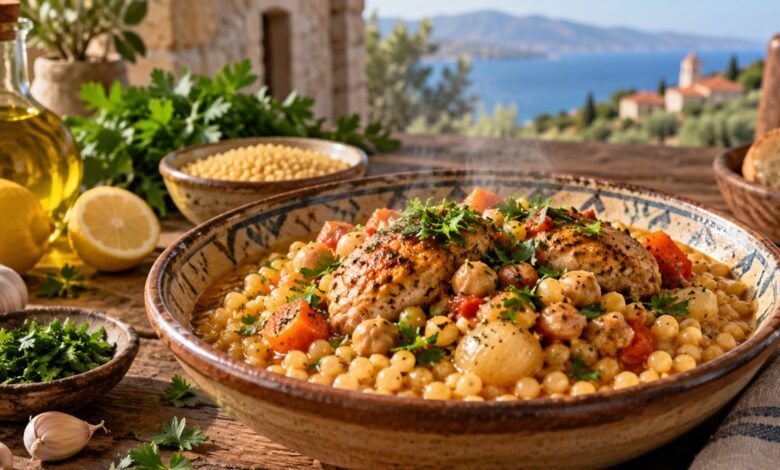
A small pasta shape distributes easily throughout a broth. It can be paired with chicken, beans, lentils, vegetables, tomato, mushrooms or slow-cooked meat. Historical descriptions also place Kouskousi in soups and stews, where its dry structure can help thicken the surrounding liquid.
There is, however, a catch: Kouskousi continues absorbing liquid after it cooks.
That means a soup that looks perfectly balanced in the saucepan can become noticeably thicker after sitting for ten or fifteen minutes.
For a broth-based dish, it is often better to add the pasta conservatively and keep extra stock available.
What Kouskousi Tastes Like When It Is Cooked Properly
Kouskousi is generally mild rather than aggressively flavoured.
Its character comes more from wheat, texture and the ingredients surrounding it than from a strong built-in seasoning. That is useful because it allows the pasta to work with both restrained and intensely flavoured recipes.
A simple Kouskousi dish might lean on:
- Olive oil
- Lemon
- Garlic
- Fresh herbs
- Tomato
- Black pepper
- Feta or another Greek cheese
- Chickpeas or lentils
- Chicken or lamb
- Seasonal vegetables
The appeal is its ability to carry flavour rather than overpower it.
A rich broth can make it taste deeply savoury. A tomato sauce can turn it into a comforting pasta dish. Fresh lemon and herbs can make the same ingredient feel lighter.
This flexibility is part of the reason small regional pasta shapes survived beyond the homes in which they were originally made.
Kouskousi with lentils is a documented Greek combination
Greek food writer Diane Kochilas has published a traditional Greek recipe pairing Kouskousi with lentils, cumin, coriander and dried fruit, describing the Kouskousi as a tiny Greek pasta. The recipe places it within the broader tradition of Greek country cooking, where lentils can be cooked alongside pasta, bulgur or rice.
That combination makes sense from both a culinary and practical perspective: the pasta adds texture and carbohydrates while the lentils provide a substantial base.
For a related food-history read, The Today News has also examined how a regional Spanish pastry can carry the identity of the place that made it famous: Best Piononos de Santa Fe Near Me: 4 Places in Granada
Kouskousi, Orzo, Pearl Couscous and Pastina Are Not Interchangeable by Default
Kouskousi sits in a crowded category of small foods that are easy to confuse.
Orzo has a recognisable rice-like shape and is typically smoother and more uniform.
Pastina is a broad term used for very small pasta shapes, so its exact form can vary.
Pearl couscous, sometimes called Israeli couscous, is larger and more spherical, with a firmer and chewier texture.
Bulgur is different again because it is cracked and processed wheat rather than pasta formed from dough.
These foods may sometimes substitute for one another in a soup or one-pot recipe, but the ratio of liquid, cooking time and final texture can change.
That is why replacing Kouskousi based solely on appearance can disappoint. The right substitute depends on the role the ingredient is playing.
A useful substitution rule
Think about what the original Kouskousi is doing in the recipe.
If it is being used to add tiny pasta pieces to soup, another small pasta may work.
If it is supposed to remain distinct and slightly chewy, a larger pasta could change the dish considerably.
If the recipe depends on the fluffy granules of traditional couscous, Greek Kouskousi is not automatically a like-for-like replacement.
The shape is only one part of the equation. Production method and cooking behaviour matter just as much.
Is Kouskousi a Healthy Food?
Kouskousi can fit comfortably into a balanced diet, but there is no reason to treat it as a specialist health food.
Its nutritional profile depends on the exact ingredients and serving size. A wheat-based pasta is primarily a source of carbohydrate and also provides some protein. Versions containing eggs or milk will have a different nutrient profile from simpler formulations.
What matters just as much is what accompanies it.
Kouskousi served with vegetables, pulses, olive oil and a suitable protein source creates a different meal from a very large serving with a heavy, highly processed sauce.
The broader Greek food tradition also makes it easy to pair small pasta with vegetables, legumes, herbs, meat and dairy.
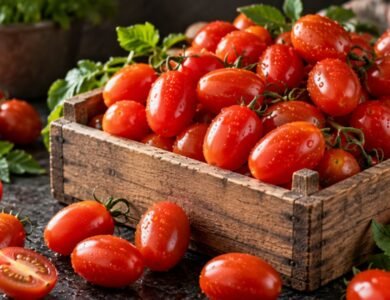
Global Nova’s recent feature on grape tomatoes provides another useful ingredient-led example, particularly for Mediterranean-style cooking where small pasta and fresh vegetables can work naturally together: Grape Tomatoes: Nutrition, Benefits, Uses & Growing Guide
Is Kouskousi gluten-free?
Traditional wheat-based Kouskousi is not naturally gluten-free.
MedlinePlus identifies wheat, semolina and couscous among foods that contain gluten, and advises people who need a gluten-free diet to avoid foods made from wheat unless a suitable gluten-free alternative is specifically identified.
That matters because Kouskousi can look similar to rice or other naturally gluten-free foods.
Appearance is irrelevant to the allergen question.
If someone has coeliac disease or another medically advised reason to avoid gluten, the product should be checked carefully for wheat and any gluten-free certification. MedlinePlus also stresses the importance of reading labels rather than assuming a product is safe from its appearance or name.
The Most Useful Kouskousi Timeline Is Regional, Not Mythical
There is no reliable evidence establishing one inventor or one exact year for Greek Kouskousi.
That is worth saying plainly because food histories are often simplified online.
A more defensible timeline looks like this:
| Period | Kouskousi story |
|---|---|
| Traditional Greek household era | Small pasta production developed as part of a wider regional food-preservation culture |
| Late summer, historically | Traditional Greek pasta was commonly produced and dried for later use |
| Long-standing Thracian tradition | Kouskousi became associated with northeastern Greek food culture, including Soufli |
| Modern tourism era | Visit Greece continues to identify couscous-style Kouskousi among Soufli’s local pasta specialitie |
| 2020 | UNESCO inscribed the knowledge, skills and practices connected with North African couscous production and consumption |
| 2026 | Online search results continue to blur Greek Kouskousi, kouskousaki and North African couscous, making contextual definitions especially useful |
That last point explains why the keyword is generating so much confusion. The internet has a tendency to compress regional food names into a single definition even when local traditions tell a more complicated story.
What Kouskousi Tells Us About Greek Regional Food
A tiny pasta can reveal a lot about how a food culture works.
Greek regional cuisine has long made practical use of wheat, dairy, eggs, legumes, vegetables and preserved ingredients. Traditional pasta was one way to convert those ingredients into foods that could be dried, stored and used later.
Kouskousi belongs to that practical tradition.
Its value is not based on rarity alone. It is useful. It can be stored dry, cooked in liquid, paired with meat or vegetables, added to soup and adapted to the ingredients available in the kitchen.
The official Greek tourism material also places Kouskousi within Soufli’s broader local-food identity rather than presenting it as an isolated novelty.
That is perhaps the most revealing detail of all.
The modern internet tends to ask, “What is Kouskousi?” Regional food culture asks a slightly different question: Where does this version belong, how was it made, and how was it actually eaten?
Those questions produce a much clearer answer.
People Also Ask About Kouskousi
What is Kouskousi?
Kouskousi is a small pasta associated with Greek regional cooking, especially Thrace and Soufli in northeastern Greece. It can resemble couscous, but Greek Kouskousi is generally handled as pasta and cooked in liquid. Ingredients vary between traditional recipes and commercial products, so the label should be checked before preparation.
Is Kouskousi the same as couscous?
Not necessarily. In Greek culinary usage, Kouskousi can refer to a tiny pasta, while traditional North African couscous is made from semolina formed into small granules and traditionally steamed. Similar names and appearances create the confusion. UNESCO’s heritage record specifically documents the North African couscous tradition of Algeria, Mauritania, Morocco and Tunisia.
What is Kouskousi made from?
Kouskousi is generally wheat-based. Depending on the product or regional recipe, it may contain semolina, wheat flour, water, eggs, milk, salt or other ingredients. Historical descriptions of Thracian Kouskousi include egg, milk, semolina or bulgur and wheat flour. Modern packaged products can be simpler, so the ingredient label is the best authority.
How do you cook Kouskousi?
Greek pasta-style Kouskousi is generally cooked in boiling water, broth, soup or another suitable liquid until tender. The exact timing depends on the size and composition of the product. Package instructions should take priority because Kouskousi is not produced to one universal specification.
Does Kouskousi contain gluten?
Most traditional Kouskousi contains gluten because wheat or wheat-derived semolina is normally used. MedlinePlus lists wheat, semolina and couscous among gluten-containing foods and advises people who need to avoid gluten to check labels carefully. A product should not be considered gluten-free simply because its pieces resemble rice or another grain.
Can Kouskousi be used in soup?
Yes. Its small size makes it particularly suitable for soups and broth-based dishes. It can cook directly in the liquid and absorb some of the surrounding flavour. Because it continues taking up liquid as it sits, adding too much Kouskousi can make a soup significantly thicker than intended.
The Real Story Is Hidden in the Context
Kouskousi is a useful reminder that food names do not always travel neatly across languages.
In Greek regional cooking, it can refer to a small pasta with a strong connection to Thrace and Soufli. In broader online usage, the spelling can be confused with or applied to couscous, the North African staple whose production and consumption traditions were inscribed by UNESCO in 2020.
The practical answer is therefore straightforward: look at the product, the ingredients and the cooking method before deciding what Kouskousi means.
That tiny check prevents the biggest mistake in the kitchen—and preserves the regional distinction that makes the food worth researching in the first place.
Sources & Verification
- Visit Greece — Local Products in Soufli: official Greek tourism material identifying couscous-style Kouskousi among Soufli’s traditional pasta products.
- Greek government agricultural portal — Pasta: information on Greece’s regional pasta traditions, ingredients and historical seasonal production.
- UNESCO Intangible Cultural Heritage — Couscous: official heritage record documenting the production and consumption practices of couscous in Algeria, Mauritania, Morocco and Tunisia, inscribed in 2020.
- NIH MedlinePlus — Gluten-free diets and celiac disease: current medical guidance on wheat, semolina, couscous and gluten.
- Diane Kochilas — Greek Kouskousi recipe: culinary documentation of Kouskousi as a small Greek pasta used with lentils and other traditional ingredients.
- Historical Greek culinary account: documentation describing a Thracian Kouskousi made with ingredients including egg, milk, semolina or bulgur and wheat flour, then hand-shaped and dried.
Verified outbound resources
Visit Greece — Local Products in Soufli
UNESCO — Knowledge, know-how and practices pertaining to the production and consumption of couscous
Greek Government Agricultural Portal — Traditional Greek Pasta
Editorial Disclaimer: Kouskousi varies by region, household tradition and commercial producer. Historical descriptions should not be treated as universal ingredient lists, and package instructions should take priority when preparing a specific product. Nutritional, allergen and ingredient information can vary between products and formulations.