Custom Mailer Boxes: The Packaging Choice That Can Change How a Brand Is Opened, Shipped and Remembered

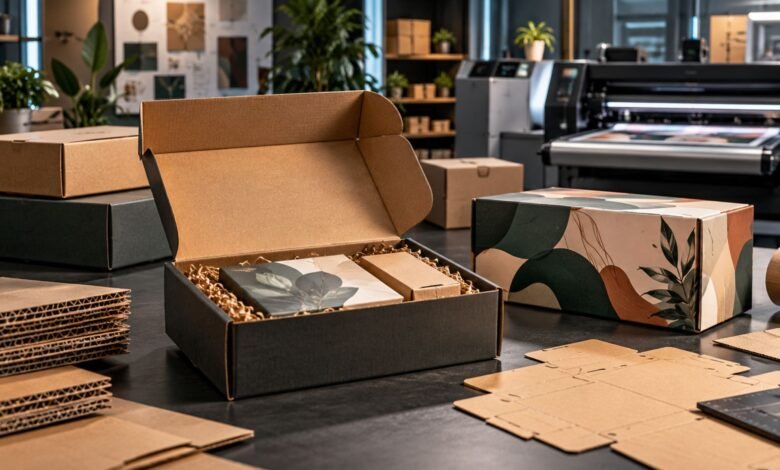
The box arriving at a customer’s door is no longer just a container—it is part of the product experience, the shipping system and, increasingly, the brand’s environmental footprint.
A plain shipping carton can protect a product perfectly well. Yet for an e-commerce brand, subscription company, cosmetics business or growing retailer, the packaging often becomes the first physical interaction a customer has with the business. Before the product is touched, the box is handled, photographed, opened, stored, recycled and judged.
That makes custom mailer boxes a deceptively technical purchase. The decision involves structural engineering, board selection, dimensions, printing, finishing, fulfilment efficiency and end-of-life considerations. In the UK, packaging choices also sit within a regulatory environment that has changed materially under Extended Producer Responsibility (EPR), with updated guidance continuing through 2026.
The commercial question is therefore bigger than “Which box looks good?” The real question is how to create custom shipping boxes that protect the contents, use material efficiently, print reliably, fit the fulfilment workflow and remain practical to recover after use.
The 45-Second Answer: What Custom Mailer Boxes Actually Are
Custom mailer boxes are purpose-designed folding shipping packages made to a brand’s required dimensions, board specification and printed artwork. They combine structural protection with presentation, allowing businesses to use one package for fulfilment and brand communication while controlling size, material use, print coverage and opening experience.
Why a Custom Box Became Part of the Product
Traditional shipping packaging was primarily concerned with surviving transport. Modern e-commerce adds another requirement: the package must work when it reaches an individual consumer.
That changes the design brief.
A retailer shipping clothing may need a shallow package that accommodates folded garments without excessive empty space. A cosmetics company may require a tighter fit around bottles and inserts. A subscription business may need repeatable dimensions so the same packaging integrates with its packing stations and storage shelves.
A custom design can address those variables at the construction stage rather than forcing a standard carton to perform a job it was never designed for.
FEFCO, the European Corrugated Packaging Association, describes corrugated packaging as a material whose geometry provides strength, cushioning and structural support. Corrugated board is constructed from liners and fluted paper, with single-wall, double-wall and triple-wall structures available for different requirements.
The result is a packaging format that can perform several functions simultaneously:
- protect the product during handling and transport;
- establish consistent dimensions for fulfilment;
- carry printed brand information;
- support inserts and presentation features;
- reduce unnecessary empty space;
- create a recognisable opening experience;
- provide a paper-based package that can enter established recycling streams when its composition and design are appropriate.
The last point needs qualification. A paper-based box is not automatically optimised for recycling merely because its main substrate is cardboard. Coatings, laminations, adhesives, inks, barrier layers and integrated components can influence recyclability. FEFCO’s 2025 recyclability guidance specifically considers material composition, colours, barriers, coatings, additives, closures, adhesives, inks and integrated components.
Custom, Personalised and Printed: Three Terms That Sound Similar but Solve Different Problems
Searches for personalized mailer boxes, custom box printing, custom printed box and custom shipping boxes often produce overlapping results, but the practical objectives can differ.
| Term | Practical meaning | Typical requirement |
|---|---|---|
| Custom mailer boxes | Box engineered around a particular size, product and opening format | Dimensions + structure |
| Personalized mailer boxes | Packaging adapted for individual customers, campaigns, names, messages or product variants | Variable artwork or short runs |
| Custom shipping boxes | Shipping cartons designed around a fulfilment and protection requirement | Strength + dimensions |
| Custom box printing | Printing service applied to a selected box structure | Artwork + print process |
| Custom printed box | Finished package carrying branded or decorative graphics | Board + artwork + production method |
These are not always formal industry definitions; suppliers may use the terminology differently. The distinction is useful because a business can need one element without needing all five.
A company may order a completely custom-sized box with a simple one-colour logo. Another may use a stock structural format but invest heavily in personalised artwork. A third may require sophisticated digital printing because every package contains a different message.
The strongest specification starts with the product and fulfilment problem, not the keyword used on a supplier’s website.
What Sits Inside a Corrugated Mailer Box
The engineering begins with the board.
FEFCO explains that standard corrugated board uses two liners around a fluted inner medium. The fluting creates connected arches that give the board rigidity and resistance, while the air within the flute contributes to its protective properties.
Single-wall, double-wall and triple-wall structures
Single-wall board consists of one fluted layer between two liners. Double-wall board contains two fluted layers and three liners, while triple-wall construction contains three fluted layers and four liners.
That does not mean a thicker board should automatically be chosen. More material can increase weight, storage requirements and transport cost.
The correct board is the one that matches the product, handling conditions and required protection.
For a lightweight apparel shipment, excessive board strength may add cost without solving a real problem. For heavier or fragile merchandise, a more substantial structure may provide greater resistance to compression and handling damage.
The package should also be tested in its intended configuration. Product weight, internal voids, inserts, stacking conditions, closure design and distribution environment all influence performance.
The geometry matters as much as the paper
FEFCO’s internationally used coding system standardises common corrugated packaging constructions and includes dedicated designs for retail and e-commerce applications. The current 12th edition reflects newer packaging designs and changing market requirements.
For a buyer, the value of such standardised design language is simple: a packaging engineer, box converter and customer can describe a construction more precisely than by relying on a vague phrase such as “small folding shipping box.”
The Box Is Also a Printing Surface
The phrase custom box printing hides several production technologies.
FEFCO states that flexographic printing is commonly used on corrugated packaging, while digital direct printing has expanded the range of possibilities. Printing can take place inline or offline depending on the production configuration.
Flexographic printing
Flexographic printing is well established for corrugated packaging and is suited to production environments where repeatability and throughput matter.
It can be particularly appropriate when a company orders larger quantities of the same design.
Digital printing
Digital print changes the economics and workflow of shorter or more variable runs.
FEFCO notes that digital printing can support individualisation and fast orders, while modern corrugated production increasingly uses digital technologies alongside established print methods.
That makes digital printing relevant to personalised mailer boxes, seasonal campaigns, regional artwork, limited editions and other applications where each batch may differ.
Offset and premium presentation
Offset printing can also be used as a pre-print process, with printed paper later laminated to corrugated board. FEFCO describes offset, flexographic and newer digital approaches as different ways of achieving varying visual and production objectives.
The choice therefore depends on more than image quality.
A realistic specification considers:
- quantity;
- number of artwork versions;
- colour requirements;
- substrate;
- desired surface finish;
- lead time;
- variable-data requirements;
- tooling and setup;
- storage;
- expected reorder frequency.
Why Right-Sized Packaging Is a Commercial Decision, Not Just an Environmental One
A box that is too large creates empty space. That can require additional void fill, occupy more warehouse volume and increase the amount of air transported through the delivery network.
A box that is too small can create an entirely different problem: compression, product damage, difficult packing and unreliable presentation.
The strongest custom shipping boxes sit between those extremes.
FEFCO specifically highlights the ability of corrugated packaging to be designed around product shape and size, with folding characteristics that can also improve storage efficiency. Its ecodesign guidance links efficient packaging geometry with better use of storage and transport space.
For fulfilment teams, dimensions become measurable operating variables.
The packaging specification should capture
| Specification | Why it matters |
|---|---|
| Internal length × width × height | Determines product fit |
| External dimensions | Affects storage and shipping calculations |
| Board construction | Determines structural behaviour |
| Flute configuration | Influences thickness and performance |
| Closure design | Controls assembly and opening |
| Print coverage | Determines branding and production requirements |
| Finish | Changes appearance and surface properties |
| Internal protection | Reduces movement and product-to-product contact |
| Order quantity | Influences production economics |
| Artwork versions | Determines print complexity |
| Recyclability considerations | Affects material and finishing choices |
This is where a custom printed box can outperform a generic carton without becoming unnecessarily elaborate. The goal is not maximum packaging. It is packaging that is appropriately engineered for the job.
Personalised Mailer Boxes Are Moving Printing Closer to the Individual Customer
Personalisation is different from simply adding a logo.
A logo repeats the same message across every carton. Personalised production can introduce campaign-specific graphics, geographic variations, customer names, product-specific artwork or changing promotional material.
Digital printing is particularly relevant because it can reduce the dependence on traditional fixed-print workflows for variable designs. FEFCO identifies individualisation and rapid order capability among the advantages associated with digital corrugated printing.
That creates new possibilities for smaller brands.
A business can design one structural package while changing the visual layer between campaigns. The same box platform might support a Christmas edition, a product launch, a loyalty programme, a collaboration or a regional promotion.
The structure stays familiar. The printed experience changes.
That flexibility is one reason custom packaging increasingly sits at the intersection of manufacturing and marketing.
Finishes Can Transform the Surface—But They Also Change the Specification
Gloss, matte, spot effects, coatings and laminations can alter how a custom box looks and feels.
The technology is not purely cosmetic.
A current example is UV-curable coating technology, where ultraviolet energy initiates polymerisation to create a solid coating film. UV varnishes can be applied broadly or selectively, including spot applications that create contrast between coated and uncoated areas.
However, a premium finish should never be selected only because it photographs well.
Every additional coating, adhesive, laminate or integrated component can influence production and end-of-life processing. FEFCO’s recyclability guidance explicitly identifies coatings, laminations, adhesives, inks and other components as parameters that may need assessment.
For a brand promoting environmental credentials, the important question is therefore not simply “Does this box contain paper?” It is “How was the complete package designed, produced and specified for its intended waste stream?”
Sustainability Claims Are Becoming More Technical in the UK
For UK businesses, this issue has become more consequential in 2026.
GOV.UK states that packaging should use the minimum weight and volume needed to keep products safe and hygienic. Its environmental guidance also covers recyclable, reusable, biodegradable and energy-recovery packaging requirements.
The UK’s Extended Producer Responsibility framework places end-of-life packaging costs more directly on producers that place packaging on the UK market. The government’s current guidance says EPR creates financial incentives to reduce unnecessary packaging, encourage reuse where practical and support effective recycling.
For 2026 reporting, the government’s threshold guidance says a UK-established business, subsidiary or corporate group may become an obligated producer where it supplied or imported more than 25 tonnes of packaging in the previous year and had worldwide annual turnover of at least £1 million. The rules then distinguish between small and large producers using packaging tonnage and turnover.
The current UK thresholds at a glance
| Packaging supplied/imported | Turnover | 2026 EPR position described by GOV.UK |
|---|---|---|
| Less than 25 tonnes | Any listed turnover band | No obligation under the stated threshold test |
| 25–50 tonnes | £1m–£2m | Small producer |
| 25–50 tonnes | More than £2m | Small producer |
| More than 50 tonnes | £1m–£2m | Small producer |
| More than 50 tonnes | More than £2m | Large producer |
The detailed rules include additional supply-chain tests and exceptions, so the table should not be treated as a complete legal assessment. GOV.UK advises businesses to check their specific packaging activities and responsibilities.
For larger producers, the obligations can include registration, packaging-data reporting, acquiring recycling evidence such as PRNs or PERNs where applicable, certificates of compliance, waste-disposal fees and record retention.
That makes material selection and packaging data increasingly important commercial considerations rather than paperwork left until the end of a product-development process.
A Material Can Be Recyclable Without Every Design Choice Being Recycling-Friendly
The distinction is worth making carefully.
FEFCO reports that corrugated packaging is produced from recycled and/or virgin paper fibres and has established recycling infrastructure across Europe. Its 2025 recyclability guidelines emphasise that actual recyclability depends on composition, design, collection, sorting and reprocessing conditions.
GOV.UK’s recyclability assessment methodology specifically classifies cardboard boxes and corrugated cardboard used for shipping as paper-and-board packaging.
This creates a useful hierarchy of questions for packaging buyers:
- What is the primary substrate?
- Are coatings or laminations required?
- What inks and adhesives are being used?
- Are plastic components integrated into the package?
- Can the package be readily separated or prepared for recycling?
- What waste stream is available to the customer?
- What evidence supports the supplier’s environmental claim?
FSC certification can address another part of the supply-chain question. FSC identifies cardboard and corrugated paper packaging within its packaging product categories and provides certification mechanisms intended to demonstrate responsible sourcing of forest-based materials.
An FSC claim, however, is not the same thing as a claim that the finished package is universally recyclable. Those are different attributes and should be evaluated separately.
The Numbers That Actually Drive a Custom Box Quote
There is no responsible universal price for custom mailer boxes because the specification changes the manufacturing economics.
A quote can move substantially with changes in:
- box dimensions;
- board grade;
- flute structure;
- quantity;
- print coverage;
- number of colours;
- number of artwork versions;
- cutting and tooling requirements;
- special finishes;
- inserts;
- assembly requirements;
- packaging and palletisation;
- delivery destination;
- reorder frequency.
A business comparing suppliers should therefore avoid comparing only the headline per-box price.
The more meaningful comparison is cost per usable shipped package.
A box that costs slightly more but eliminates unnecessary void fill, improves packing speed and reduces product movement may produce a different operating result from a cheaper generic carton.
Similarly, a premium print finish may add cost without adding meaningful customer value for a product where the package is immediately discarded.
The right question is not “Which quote is cheapest?” It is “Which specification delivers the required protection, brand experience and operational performance at the expected volume?”
Quick Snapshot: What a Strong Mailer Box Specification Contains
- Primary format: Folding mailer or other suitable corrugated construction.
- Primary material: Paper-based corrugated board selected for the intended load and distribution conditions.
- Structure: Single-wall, double-wall or another suitable board construction.
- Dimensions: Based on actual product measurements rather than generic carton assumptions.
- Print: Flexographic, digital, offset-preprint or another suitable production method.
- Personalisation: Optional variable or campaign-specific artwork where the production process supports it.
- Finishing: Matte, gloss, UV or other surface treatment when justified by the design requirement.
- Sustainability review: Material composition, sourcing, coatings, adhesives, inks and end-of-life pathway considered together.
- Compliance: UK businesses should assess packaging responsibilities under current EPR rules where applicable.
From Packaging Brief to Finished Box: The Production Timeline
Stage 1 — Product measurement
The product is measured in its shipping-ready configuration, including protective wrapping, inserts and required clearance.
Stage 2 — Structural design
The packaging designer creates the folding geometry, flap arrangement, dimensions and closure system.
Stage 3 — Board selection
The board construction is selected according to the product weight, protection requirement and expected handling conditions.
Stage 4 — Prototype and testing
A sample should be checked for fit, closure, assembly, movement and presentation before a large production run.
Stage 5 — Artwork preparation
The brand supplies print-ready artwork adapted to the dieline and printing process.
Stage 6 — Printing
The selected print technology applies the required graphics to the board or relevant paper component.
Stage 7 — Die-cutting and conversion
FEFCO describes corrugated conversion as a sequence that can include printing, die-cutting, folding and gluing, depending on the package design.
Stage 8 — Delivery and fulfilment
Finished boxes are commonly supplied flat, allowing more efficient storage and distribution before they are erected for packing.
The Shipping Constraint Most Designers Discover Too Late
A beautiful package still has to survive the carrier.
Royal Mail’s heavy-item guidance, for example, advises customers not to overpack a box, recommends using two boxes rather than risking a split carton where necessary, and states that an individual box should weigh no more than 20kg for its parcel guidance.
That is a carrier-specific example, not a universal shipping rule.
The broader lesson is more useful: custom packaging should be designed against the actual distribution service rather than in isolation from it.
Dimensions, weight, compression, handling, sealing and product stability should be considered before artwork is finalised.
The Sign-Off: A Better Box Is More Than a Better-Looking Box
Custom mailer boxes work because they combine several disciplines inside one physical object.
The structure protects the product. The dimensions influence packing efficiency. The print communicates the brand. The opening mechanism shapes the customer experience. The material composition influences recycling. And, in the UK, the packaging can also have producer-responsibility consequences under the current EPR framework.
That is why the most useful approach to custom printed boxes starts with evidence rather than decoration.
Measure the product. Specify the load. Select the board. Test the structure. Choose the print process. Question every finish. Review the end-of-life pathway. Then make the box visually distinctive.
The strongest package is rarely the one with the most features.
It is the one where every feature has a reason to exist.
People Also Ask About Custom Mailer Boxes
What are custom mailer boxes?
Custom mailer boxes are purpose-designed folding packages produced around a specific product, brand identity and shipping requirement. They can be manufactured in different corrugated board structures, dimensions and print configurations, allowing businesses to combine product protection with branded presentation in a single shipping package.
Are personalised mailer boxes different from custom mailer boxes?
Personalised mailer boxes are a form of custom packaging focused on variable or customer-specific presentation. A custom box may use the same artwork for thousands of units, while personalised packaging can use different names, messages, campaigns, regional designs or product-specific graphics depending on the printing workflow.
What is the best material for custom shipping boxes?
Corrugated fibreboard is a common material for custom shipping boxes because its fluted construction provides structural rigidity and protection at relatively low material weight. Single-wall, double-wall and triple-wall structures are available, and the appropriate specification depends on the product, distribution conditions and required protection.
Can custom printed boxes be recycled?
Custom printed boxes can often enter paper-and-cardboard recycling systems when their complete construction is compatible with the relevant recycling process. Recyclability is influenced by more than the cardboard substrate; coatings, laminations, adhesives, inks, barriers and integrated components can affect assessment and processing.
Is digital printing suitable for personalised mailer boxes?
Digital printing is well suited to personalised mailer boxes when businesses need short runs, multiple artwork versions or variable packaging designs. FEFCO notes that digital direct printing has expanded corrugated packaging possibilities and can support fast orders and individualisation.
What affects the price of a custom printed box?
Custom printed box pricing is primarily affected by dimensions, material specification, order quantity, printing method, artwork complexity, tooling, finishing, inserts and logistics. A meaningful comparison should therefore evaluate the complete specification and delivered cost rather than judging suppliers only by a headline per-unit figure.
Editorial Disclaimer
Packaging specifications, recyclability outcomes, carrier rules, supplier capabilities and regulatory responsibilities vary by product, jurisdiction and production configuration. UK EPR obligations should be assessed against the current GOV.UK guidance for the specific business and packaging activity. Environmental claims should be supported by appropriate evidence rather than inferred solely from the use of paper or cardboard.
Read More on Global Nova
