Mark Fiennes: The Photographer Behind Ralph Fiennes—and the Family Life That Shaped a Remarkable Creative Dynasty
Long before Ralph Fiennes became a major screen and stage name, his father was building a serious artistic career of his own—one that reached historic houses, Windsor Castle, major books and international museum projects.

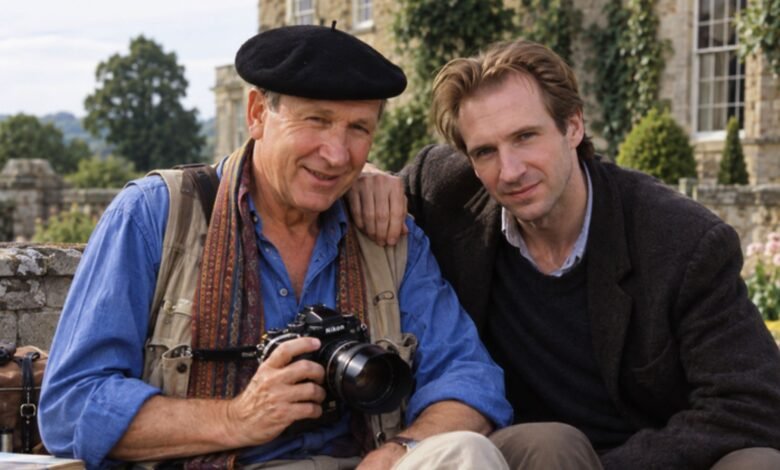
Mark Fiennes is easy to encounter as a footnote in the biography of Ralph Fiennes. That description misses the most interesting part of the story. Mark was not simply the father of a famous actor; he was a photographer, farmer, builder and illustrator whose professional work became closely associated with architecture, historic interiors, gardens and Britain’s great houses. His photographs were published in Country Life, used in books, and commissioned for major heritage projects.
The subject has also regained a quieter form of relevance in 2026 because Ralph Fiennes has spoken publicly about his childhood and his parents. In a May 2026 conversation with Gyles Brandreth, Ralph described Mark as a farmer-turned-photographer and discussed the strengths, difficulties and creative environment created by his parents, Jennifer Lash and Mark Fiennes.
BLUF: Mark Fiennes was an English photographer, farmer and illustrator born on November 11, 1933, in Dalton, Northumberland. He was Ralph Fiennes’s father and built a respected late-career photography practice focused on architecture, interiors, gardens and heritage properties before his death in Clare, Suffolk, on December 30, 2004.
Mark Fiennes at a glance: the facts that matter most
- Full name used professionally: Mark Fiennes
- Born: November 11, 1933
- Birthplace: Dalton, Northumberland, England
- Died: December 30, 2004
- Place of death: Clare, Suffolk, England
- Known for: Photography, illustration, farming and building
- Speciality: Architecture, historic interiors, gardens and houses
- Major publication connection: Country Life
- Famous son: Ralph Fiennes
- Other notable children: Joseph Fiennes, Martha Fiennes, Magnus Fiennes, Sophie Fiennes and Jacob Fiennes
- First wife: Jennifer “Jini” Lash
- Second wife: Caroline Evans
From Eton discomfort to farms, ranches and a completely different life
Mark Fiennes did not begin with the predictable trajectory of a professional photographer.
Born in Northumberland in 1933, he was the eldest son of industrialist Maurice Fiennes and Sylvia Fiennes. Mark attended Eton but had a deeply negative view of his time there. The Independent obituary records that he struggled with illness during his school years, while both the Independent and Guardian describe how an outdoor life became central to his recovery and subsequent direction.
His years away from England were unusually practical. He worked on sheep stations in New Zealand and Australia and on cattle ranches in Texas before returning to Britain in the late 1950s. The experience helped turn him toward farming, and he eventually took on a farm tenancy in Suffolk.
That agricultural chapter matters because Mark’s later identity as a photographer did not emerge from a conventional art-school career. His work developed through lived experience: land, buildings, tools, houses, materials and an intimate understanding of place.
He also possessed practical skills beyond photography. The Guardian obituary describes a man who designed and helped build his own house in West Cork, while later accounts portray him as an accomplished carpenter and enthusiastic gardener.
Mark Fiennes and Jennifer Lash created an unusually creative household
In 1962, Mark married Jennifer Lash, known within the family as Jini. She was a novelist and artist, and the marriage significantly strengthened the artistic side of Mark’s life. The couple had six children and also fostered Michael Emery, who became an archaeologist.
Their children included:
| Family member | Relationship to Mark Fiennes | Known field |
|---|---|---|
| Ralph Fiennes | Son | Actor, director |
| Joseph Fiennes | Son | Actor |
| Martha Fiennes | Daughter | Filmmaker/director |
| Magnus Fiennes | Son | Composer and musician |
| Sophie Fiennes | Daughter | Filmmaker/documentary director |
| Jacob “Jake” Fiennes | Son | Gamekeeper/land professional |
| Michael Emery | Foster son | Archaeologist |
The creative concentration inside the household is striking. Ralph became an internationally recognised actor; Joseph followed him into acting; Martha became a filmmaker; Sophie built a documentary career; and Magnus became a composer and music producer. The Guardian’s account of the family describes Mark as a farmer who moved into photography after marrying Jini, while the children grew up surrounded by books, art, moving images and practical work.
The family itself was frequently on the move. They lived in Suffolk, Wiltshire, London and Ireland, restoring houses and adapting to unstable finances rather than living a uniformly privileged country-house existence. The Guardian’s later family profile specifically notes that the household combined creative ambition with financial uncertainty and hard work.
That distinction is important. The Fiennes name carries an old British aristocratic association, but Mark’s immediate family life was much more improvised. The records show a household where children helped with projects, photography and the family postcard business, rather than simply inheriting a polished social position.
The turning point came when Mark Fiennes was already an adult
Mark did not establish himself professionally as a photographer in his youth. The Guardian says he was 36 when he took up photography professionally; the Independent places the transition at nearly 40. The safest description is that his professional photography career began in his late 30s.
His earliest freelance assignments were modest: local horse trials, weddings and portraits. A commission to photograph a house in Ireland proved more consequential, helping point him toward architectural photography.
That shift eventually became his defining professional identity.
He developed a reputation for photographing buildings not merely as structures, but as designed environments. Historic houses, interiors, gardens, architectural details and rooms filled with furniture gave him a natural subject range. The Independent records that his work appeared in articles and books across Britain, while the Guardian notes that architecture became the field for which he was best known.
Why architecture suited Mark’s photographic eye
Mark’s surviving professional description is remarkably consistent across contemporary obituaries: patience, precision, light and form.
The Guardian described his work as unusually clear and praised the artist’s eye behind it. The Independent similarly emphasised his sensitivity to places and people and his ability to bring social observation into images without making them feel artificial.
That helps explain why his portfolio found a natural home in heritage publishing.
He was not principally known as a celebrity portraitist. His strength was documentation with aesthetic control: making a historic room, garden or building communicate its character through composition, light and detail.
The Country Life years made Mark Fiennes a recognised architectural photographer
One of the clearest measures of Mark Fiennes’s professional standing is his long association with Country Life.
The Guardian states that he worked for the magazine for 12 years, while the Independent places his regular association with the publication from the 1980s into the early 1990s.
His book work was extensive as well. The Independent obituary says he illustrated at least 25 books, with subjects ranging from historic properties to major architectural and political buildings. Documented examples include:
- Spencer House
- Dorneywood
- Clarence House
- 10 Downing Street: The Illustrated History
- Windsor Castle: Restoration of the State Rooms
- Chequers: The Prime Minister’s Country House and Its History
This body of work puts Mark in a particular category of British photographer: the specialist whose images became part of the historical record of buildings.
His photographs were not disposable editorial illustrations. They were used to record interiors, restoration work and architectural heritage that could change significantly over time.
Windsor Castle is one of the strongest surviving links to Mark’s professional legacy
The Windsor Castle connection is especially well documented.
The Guardian reports that Mark photographed the restoration of the State Rooms at Windsor Castle, with that work associated with the Royal Collections in 1997.
There is surviving institutional evidence for his work. A Windsor visitor guide credits Mark Fiennes as the photographer of an image of St George’s Hall, while Royal Collection material reproduced in later educational resources also identifies him as the photographer of Windsor Castle imagery. The U.S. National Archives likewise hosts a 1997 photograph of the Green Drawing Room at Windsor Castle credited to Mark Fiennes and the Royal Collection.
That evidence is significant because it connects Mark Fiennes directly to institutional heritage documentation, not simply to secondary biographies about his son.
Editorial assessment: Mark Fiennes’s strongest professional legacy is not his connection to Ralph Fiennes. It is the archive of places he photographed carefully enough that his images became part of the public record of Britain’s architectural heritage.
A major American exhibition placed his work in a wider international setting
In 1985, Mark Fiennes was involved in photographic work connected with The Treasure Houses of Britain, the landmark National Gallery of Art exhibition in Washington, D.C.
The National Gallery of Art records the exhibition as running from November 3, 1985, to April 13, 1986. It brought together roughly 700 objects from more than 200 country houses and occupied 35,000 square feet of gallery space.
Contemporary accounts identify Mark as the photographer responsible for imagery associated with the exhibition’s catalogue. The Guardian specifically states that the commission included the catalogue for Treasure Houses of Britain.
The National Gallery’s own publication archive confirms the historical scale of the project and its 1985 publication record, making it one of the most substantial documented institutional contexts for Mark Fiennes’s photography.
That achievement also reveals something about his specialism. A photographer trusted with an exhibition centered on centuries of British collecting, architecture and country-house culture needed to understand not only cameras and lenses, but also rooms, objects, proportion, light and historical context.
His portfolio stretched far beyond country houses
Mark’s later assignments extended across a much wider range of heritage subjects.
He photographed gardens, including the classical garden of Charles Shoup in the Peloponnese. He photographed the Sir John Soane’s Museum for its bicentenary. He collaborated with writer Ted Boseley on a major volume about the American architects Greene and Greene.
His Greene and Greene work remains visible in modern architectural image archives. Bridgeman Images, for example, currently lists hundreds of photographs attributed to Mark Fiennes, including architectural interiors, museum objects and buildings.
His work also appeared in publications concerning major British residences and public buildings. The breadth is notable: Windsor Castle, Clarence House, 10 Downing Street, Dorneywood, Spencer House, Chequers and major museums all sit inside the same professional portfolio.
That catalogue is a better measure of his career than a simple label such as “Ralph Fiennes’s father.”
The final chapter: family loss, Caroline Evans and unfinished projects
Jennifer Lash died in 1993. After her death, Mark worked on a commission concerning Chequers for Norma Major’s book. During that project, he met floral artist Caroline Evans, whom he later married in 1996. The couple settled in Clare, Suffolk.
Mark continued working into the final years of his life. The Independent records that he was involved in several projects when he died, including an exhibition of architect Norman Foster’s work intended for the Museum of Fine Arts in Boston.
He died in Clare on December 30, 2004, aged 71. His career had effectively come full circle: from farming and building to a late-starting photographic profession that had placed his work inside some of Britain’s most important heritage publications and collections.
Why Ralph Fiennes still matters to the Mark Fiennes story
The connection between Mark and Ralph Fiennes is not simply biological. The surviving accounts point toward a formative creative environment.
Ralph was born in Ipswich on December 22, 1962, the eldest child of Mark and Jennifer Lash. He grew up with five siblings and a foster brother in a household where literature, art, practical work and frequent moves were normal.
In May 2026, Ralph revisited that upbringing publicly in Rosebud with Gyles Brandreth. The programme explicitly describes Mark as a farmer-turned-photographer and says Ralph discussed his parents’ strengths and challenges and the artistic home they created for their children.
That recent conversation adds an important modern layer to the historical record. Mark is no longer discussed only in old obituaries or family profiles; his influence is being recalled directly by the son whose later career made the Fiennes surname globally recognisable.
Read the related Alfie Oldman biography on Global Nova
Mark Fiennes career timeline: from Northumberland to Windsor Castle
| Year | Milestone |
|---|---|
| 1933 | Born November 11 in Dalton, Northumberland |
| Early adulthood | Educated at Eton; later worked in New Zealand, Australia and Texas |
| Late 1950s | Returned to England and moved into farming in Suffolk |
| 1962 | Married novelist and artist Jennifer “Jini” Lash |
| 1960s–70s | Family lived in England and Ireland; Mark also worked on building and restoration projects |
| Late 30s | Began professional photography |
| 1976 | Family returned to England as his photographic career expanded |
| 1980s–1990s | Major work for Country Life and heritage publishing |
| 1985 | Connected with Treasure Houses of Britain at the National Gallery of Art |
| 1993 | Jini Lash died |
| 1996 | Married Caroline Evans |
| 1997 | Photographed restoration work at Windsor Castle |
| 2003 | His photography was featured in a major retrospective at the Menier Gallery in London |
| 2004 | Died December 30 in Clare, Suffolk |
| 2026 | Ralph Fiennes publicly discussed his parents and childhood in a recorded conversation with Gyles Brandreth |
The timeline combines details documented by the Guardian, Independent, institutional heritage sources and the 2026 Ralph Fiennes interview.
The financial record: what can actually be established
There is no reliable, authoritative public figure for Mark Fiennes’s personal net worth or total estate value.
The available biographies describe periods of financial difficulty, farming, house building, professional photography and later high-level commissions, but they do not provide audited accounts, verified property valuations, investment holdings or a confirmed estate total. The Independent specifically records that he lacked enough capital to make one building venture successful, while his later photography business produced substantial professional work.
Any online figure claiming a precise Mark Fiennes net worth should therefore be treated as unverified unless supported by probate records, contemporaneous financial documentation or another authoritative source.
Was Mark Fiennes Ralph Fiennes’s father?
Yes. Mark Fiennes was Ralph Fiennes’s father. Ralph was the eldest child of Mark Fiennes and novelist and artist Jennifer Lash. Mark and Lash had six children together, while the family also fostered Michael Emery.
What did Mark Fiennes do for a living?
Mark Fiennes was a photographer, farmer, builder and illustrator. His professional photography became his most established occupation, particularly in architecture, interiors, gardens and historic properties. His work appeared in Country Life, books and major heritage projects including Windsor Castle restoration photography.
When did Mark Fiennes die?
Mark Fiennes died on December 30, 2004, aged 71. He died in Clare, Suffolk, England. His death followed a long photography career that included architectural commissions, book illustration and work connected with Britain’s major historic properties.
Who was Mark Fiennes’s wife?
Mark Fiennes had two marriages. He married novelist and artist Jennifer “Jini” Lash in 1962; she died in 1993. He later married floral artist Caroline Evans in 1996, and they settled in Clare, Suffolk, where they remained until Mark’s death.
How many children did Mark Fiennes have?
Mark Fiennes and Jennifer Lash had six children: Ralph, Joseph, Martha, Magnus, Sophie and Jacob Fiennes. The family also fostered Michael Emery, who became an archaeologist. Several of Mark’s children went on to careers in acting, filmmaking and music.
What was Mark Fiennes best known for?
Mark Fiennes was best known for architectural and interior photography. His portfolio included historic houses, museums, gardens and major heritage locations. His work appeared in Country Life for roughly 12 years, in at least 25 books according to the Independent, and in documentation associated with Windsor Castle and Treasure Houses of Britain.
What Mark Fiennes left behind is larger than the family name
Mark Fiennes spent the first part of his adult life farming, travelling and building. His major photographic career came later, and that late start makes the record more interesting, not less. He developed a specialised eye for buildings, interiors, gardens and historic spaces and used it to document places whose cultural value outlasted his own lifetime.
The Ralph Fiennes connection will always be the easiest way to find his name. It should not be the final way to understand him.
Mark Fiennes’s surviving professional record places him where photography, architecture, heritage publishing and family creativity meet. His photographs helped preserve how important British rooms and buildings looked at particular moments in time. His children then carried the family’s creative impulse into cinema, television, music and documentary filmmaking.
That is why Mark Fiennes remains worth remembering on his own terms.
Sources & Verification
- The Guardian — Mark Fiennes obituary: career, family, photography, Country Life, Windsor Castle and death details.
The Guardian obituary - The Independent — Mark Fiennes obituary: birth and death details, 25-book portfolio, career history and major architectural commissions.
The Independent obituary - National Gallery of Art — Treasure Houses of Britain: official exhibition history and publication record.
National Gallery of Art — Treasure Houses of Britain - U.S. National Archives: 1997 Windsor Castle photograph credited to Mark Fiennes and the Royal Collection.
U.S. National Archives — Mark Fiennes Windsor Castle photograph - Royal Collection / Windsor heritage material: institutional attribution of Mark Fiennes photography at Windsor Castle.
- Rosebud with Gyles Brandreth, 2026: Ralph Fiennes discussing his childhood and parents, including Mark Fiennes.
- The Guardian — The famous Fiennes: family history and the creative household of Mark and Jennifer Lash.
Editorial Disclaimer
This profile distinguishes documented facts from estimates and family-history claims. Mark Fiennes’s personal wealth, private financial arrangements and certain aspects of his family life are not fully documented in authoritative public sources; where reliable verification is unavailable, no precise figure or unsupported claim has been presented.
4 Comments