Sophie Fiennes: The Filmmaker Behind the Name, Her Ralph Fiennes Connection, and Why 2026 Matters
The surname opens the door, but Sophie Fiennes’s filmography tells a very different story—one built around artists, performance, ideas, and a camera that refuses to stay at a safe distance.

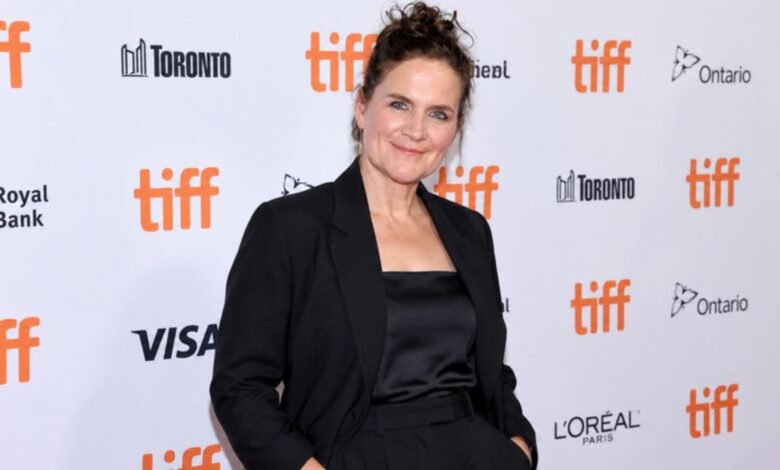
The name Sophie Fiennes can trigger an immediate association with one of Britain’s most recognisable actors. Ralph Fiennes is her brother, and that family connection is a genuine part of her biography. But it is not the best explanation for why Sophie Fiennes matters in cinema.
She has spent decades working behind the camera as a director, producer, editor and cinematographer, developing a body of documentary work concerned with performance, art, theatre, music, philosophy and the mechanics of human creativity. Her subjects have included dancer Michael Clark, artist Anselm Kiefer, musician Grace Jones and philosopher Slavoj Žižek. Her approach repeatedly places audiences inside a creative process rather than simply presenting a conventional celebrity biography.
In September 2026, that career has moved into a new public moment. The Pervert’s Guide to Utopias, her third film collaboration with Slavoj Žižek, has premiered at the 83rd Venice International Film Festival, giving renewed attention to a filmmaker who has spent much of her career operating outside the mainstream celebrity economy surrounding her family name.
BLUF: Sophie Fiennes is an English filmmaker and producer born in Ipswich on 12 February 1967. She is Ralph Fiennes’s younger sister and has built an independent documentary career through films including The Pervert’s Guide to Cinema, Grace Jones: Bloodlight and Bami, Four Quartets, Acting, and the 2026 film The Pervert’s Guide to Utopias.
Sophie Fiennes at a Glance
- Full name: Sophia Victoria Twisleton-Wykeham-Fiennes
- Born: 12 February 1967
- Birthplace: Ipswich, Suffolk, England
- Age in September 2026: 59
- Profession: Film director, producer, editor and cinematographer
- Parents: Photographer Mark Fiennes and writer and painter Jennifer “Jini” Lash
- Brother: Actor and director Ralph Fiennes
- Other notable siblings: Martha Fiennes, Magnus Fiennes, Joseph Fiennes and Jacob Fiennes
- Best-known films: The Pervert’s Guide to Cinema, The Pervert’s Guide to Ideology, Over Your Cities Grass Will Grow, Grace Jones: Bloodlight and Bami, Four Quartets, Acting
- Latest major project: The Pervert’s Guide to Utopias (2026)
The basic facts are unusually important here because Sophie Fiennes is sometimes reduced online to a single description: “Ralph Fiennes’s sister.” That is technically correct but editorially incomplete.
A more accurate description is an established British documentary filmmaker whose career developed independently from Ralph Fiennes’s acting career.
The Fiennes Family Name Explains the Interest—Not the Career
Sophie Fiennes was born into one of Britain’s most creatively accomplished families. Her father, Mark Fiennes, was a photographer, while her mother, Jennifer Lash, was a novelist and painter. The family included several children who later entered the arts or other specialist professions. Ralph became an actor and director; Martha became a filmmaker; Magnus became a composer and producer; Joseph became an actor; Sophie became a filmmaker.
Ralph Fiennes, born in Ipswich in 1962, is approximately four years older than Sophie. Their professional lives eventually intersected on screen, but they did not begin with a neatly packaged “family film dynasty.” Sophie’s own working identity emerged through documentary, performance and arts filmmaking.
A 2003 Irish Times profile captured the tension unusually well. Its framing was essentially that Sophie could not escape being introduced through Ralph, even though her career already stood on its own. At that point she had worked around Peter Greenaway, the Michael Clark dance company and the production of Hoover Street Revival.
That distinction remains useful in 2026. The Ralph Fiennes connection is not irrelevant; it is simply not the whole story.
From Dance and Experimental Film to a Distinctive Documentary Voice
Before she became strongly identified with feature documentaries, Fiennes worked in and around performance.
Her involvement with Michael Clark was an important early influence. The Michael Clark Company records The Late Michael Clark as a Sophie Fiennes-directed production, while the organisation’s history places the film within the broader documentation of Clark’s work. Fiennes also developed connections with contemporary performance groups and later worked with les ballets C de la B, making films around dance and theatre.
Her early film work included Lars from 1–10, associated with Danish director Lars von Trier and the Dogme movement, followed by The Late Michael Clark and Hoover Street Revival. The British Council identifies Hoover Street Revival as a feature documentary centred on Bishop Noel Jones and the Greater Bethany Community Church in South Central Los Angeles. It premiered at the Edinburgh International Film Festival in 2002 and also appeared at Locarno and the BFI London Film Festival.
That trajectory matters because it reveals the basic pattern that would define Fiennes’s career: she was repeatedly interested in people whose identities are inseparable from what they do.
A dancer is understood through movement.
An actor is understood through performance.
An artist is understood through the act of making.
A philosopher can be understood through the collision between ideas and images.
Fiennes’s camera often works inside that process.
The Filmography That Made “Sophie Fiennes” Mean More Than “Ralph’s Sister”
| Year | Film / Project | Fiennes’s role | Why it matters |
|---|---|---|---|
| 1998 | Lars from 1–10 | Director | Early film work connected to Lars von Trier |
| 2000–2001 | The Late Michael Clark | Director | Documentary portrait of dancer Michael Clark |
| 2002/2003 | Hoover Street Revival | Director / Producer | Feature documentary centred on a Los Angeles Pentecostal church |
| 2006 | The Pervert’s Guide to Cinema | Director / Producer | First major film collaboration with Slavoj Žižek |
| 2007 | VSPRS Show and Tell | Filmmaker / Cinematographer | Performance documentary with les ballets C de la B |
| 2010 | Over Your Cities Grass Will Grow | Director / Cinematographer | Documentary study of artist Anselm Kiefer’s enormous Barjac installation |
| 2012 | The Pervert’s Guide to Ideology | Director / Producer | Second Žižek collaboration |
| 2017 | Grace Jones: Bloodlight and Bami | Director / Producer / Editor | Portrait of Grace Jones across performance and private life |
| 2018 | Artificial Things | Director | Dance-focused short film |
| 2022 | Four Quartets | Director / Editor | Cinematic adaptation of Ralph Fiennes’s stage performance |
| 2024 | Acting | Director / Editor / Cinematographer | Documentary examination of actors rehearsing Macbeth |
| 2026 | The Pervert’s Guide to Utopias | Director / Editor | Third Žižek collaboration and completion of the trilogy |
Sources including the British Council, BFI, Institut Français and Cannes documentation support the major entries in this chronology.
The Pervert’s Guide to Cinema established the Žižek partnership
Released in 2006, The Pervert’s Guide to Cinema paired Fiennes with philosopher Slavoj Žižek, using scenes and ideas from cinema as raw material for a provocative examination of psychoanalysis, ideology and spectatorship. The BFI lists Fiennes as both director and producer.
Six years later came The Pervert’s Guide to Ideology, again directed and produced by Fiennes, with Žižek leading the intellectual argument. The BFI records the film at 135 minutes.
The collaboration was significant because Fiennes was not merely filming an academic lecture. The movies construct an active dialogue between cinema, performance and philosophical argument. That method became one of the clearest signatures of her work.
Anselm Kiefer gave her camera a giant canvas
Over Your Cities Grass Will Grow moved from philosophy to contemporary art. The 2010 film follows German artist Anselm Kiefer and his vast project at La Ribaute, his former industrial site near Barjac in southern France. The Cannes archive describes a world of buildings, tunnels, towers, lakes and monumental installations, with Fiennes combining observational footage and carefully composed visual passages.
The film was presented at the 2010 Cannes Film Festival in the Special Screenings programme.
Grace Jones became an exercise in seeing past the persona
With Grace Jones: Bloodlight and Bami, Fiennes tackled a performer whose public identity was already almost inseparable from costume, image and stagecraft.
The British Film Institute describes the 2017 documentary as an exploration of the “many sides” of Grace Jones, while the film itself moves between performance, family life, artistic work and travel.
The British Council records the film as a 115-minute Ireland–UK co-production, with Fiennes credited as director, producer, editor and one of the cinematographers.
That combination is revealing. Fiennes did not make a conventional cradle-to-career music biography. She focused on the woman behind the constructed image, allowing Jones’s contradictions to remain visible.
Sophie Fiennes and Ralph Fiennes: What Their Relationship Actually Means on Film
The search term “Sophie Fiennes Ralph Fiennes” exists for an obvious reason: they are siblings, and they eventually worked together in a particularly intimate cinematic project.
That project was T.S. Eliot’s Four Quartets.
Ralph Fiennes first committed Eliot’s poem to memory during the early stages of the COVID-19 pandemic and brought the stage production to London in 2021. Sophie Fiennes subsequently translated that theatrical work to cinema. The British Council credits Sophie as director and editor, Ralph as the principal performer, and lists both siblings among the producers.
The final film runs for roughly 82 minutes and was produced as a cinematic adaptation rather than a straightforward recording of the play. The Institut Français describes it as Ralph’s stage performance dynamically translated to screen by Sophie.
This is where the sibling relationship becomes artistically significant.
Sophie was not documenting a stranger. She was filming her brother delivering one of the most demanding poetic texts in the English language. Yet the relationship did not turn the project into a family vanity production. Her role was fundamentally that of a director shaping how a theatrical performance could live in cinema.
That was also evident in later public appearances. In May 2025, Sophie and Ralph appeared together at the Institut Français for a Q&A connected to Four Quartets, where they discussed the project as collaborators rather than simply as siblings.
A revealing comment from Sophie in a detailed interview about the film showed how seriously she viewed the problem of translating performance:
“To really construct something that was rooted in the structure of the poem…”
The important point is that Four Quartets is the clearest documented example of Sophie and Ralph Fiennes working together creatively on a finished film. Their connection therefore extends beyond genealogy into a genuine director-performer partnership.
Acting Shows Where Her Interests Had Moved by 2024
After Four Quartets, Fiennes remained focused on performance, but shifted from a famous individual performer to the rehearsal room itself.
Acting follows theatre directors Declan Donnellan and Nick Ormerod of Cheek by Jowl as they work with young actors on scenes from Shakespeare’s Macbeth. The British Council lists Fiennes as director, producer, editor and cinematographer. The film premiered at the Edinburgh International Film Festival in 2024, followed by its international premiere at IDFA 2024.
The IDFA description is particularly useful because it explains the method: Fiennes observes the rehearsal process in a direct-cinema style, focusing on how actors are coached, challenged and brought toward performance.
The setting itself becomes part of the film. Rehearsals took place in Twyford Abbey, a dilapidated country house outside London, creating a visual counterpoint to the young actors working through Shakespeare’s language. The official film site says Fiennes filmed the company over two weeks and used an immersive camera approach.
That is a recurring Fiennes technique: instead of explaining creativity after it happens, she attempts to film it while it is happening.
September 2026 Put Sophie Fiennes Back in the Spotlight
The most important current development is The Pervert’s Guide to Utopias.
The film is directed and edited by Sophie Fiennes and reunites her with Slavoj Žižek for the third time. The official Venice catalogue lists it in the Venice Open – Out of Competition section, with a running time of 133 minutes. It is an Ireland, United Kingdom, Slovenia, Netherlands and Norway co-production, with Žižek as the principal on-screen figure.
The Venice programme records screenings on 7 and 8 September 2026, placing the film at the centre of Fiennes’s current public profile at exactly the moment audiences are searching for her again.
Screen Ireland describes the film as the conclusion of a two-decade collaboration between Fiennes and Žižek and the completion of the trilogy that began with The Pervert’s Guide to Cinema in 2006 and continued with The Pervert’s Guide to Ideology in 2012.
The subject is characteristically broad. Žižek moves through classic films, music, social media, archive material and webcasts to investigate the utopian ideas embedded in modern culture.
Venice is only the beginning of the film’s 2026 festival life. Screen Ireland has also confirmed its selection for the Toronto International Film Festival, where it is scheduled for its North American premiere. TIFF’s 2026 edition runs from 10 to 20 September.
The timing is important. Sophie Fiennes is not returning to the public eye because she has suddenly become famous. She is receiving renewed attention because a major new film has placed her newest work on two of the year’s most visible international festival stages.
A Career Built Around Watching People Make Things
Across the filmography, the subject matter changes dramatically, but the filmmaking question stays remarkably stable.
Michael Clark: What does a dancer become through movement?
Anselm Kiefer: What does art look like while it is still being made?
Grace Jones: What remains after the performer steps away from the stage?
Cheek by Jowl: How does an actor learn to inhabit language and character?
Ralph Fiennes and T.S. Eliot: How can a theatrical performance be transformed without losing its structure?
Slavoj Žižek: What happens when cinema itself becomes the material for philosophical argument?
That consistency is one reason Fiennes’s work is easier to understand as a coherent career than as a list of unrelated documentaries. She repeatedly gravitates toward performance, transformation and the creative process.
Her camera is often less interested in simply asking who is this person? than in asking what happens when this person is doing the thing that defines them?
The Timeline Behind Sophie Fiennes’s Career
1967 — Birth in Ipswich
Sophie Fiennes is born in Ipswich, Suffolk, on 12 February 1967, the daughter of Mark Fiennes and Jennifer Lash.
1990s — Entry through performance and the arts
Her early professional development includes work connected to dance and the Michael Clark scene, establishing the performance-based interests that later became central to her films.
1998 — Early film work
Lars from 1–10 becomes an early directorial project connected to Lars von Trier and the Dogme-era conversation around filmmaking.
2002–2003 — Hoover Street Revival
Fiennes directs Hoover Street Revival, documenting Bishop Noel Jones and the Greater Bethany Community Church in South Central Los Angeles. The film has selections at Edinburgh, Locarno and the BFI London Film Festival.
2006 — First Pervert’s Guide
The Pervert’s Guide to Cinema establishes her long-running collaboration with Slavoj Žižek.
2010 — Anselm Kiefer
Over Your Cities Grass Will Grow reaches Cannes in the Special Screenings programme.
2012 — Ideology enters the trilogy
The Pervert’s Guide to Ideology continues the Fiennes–Žižek partnership.
2017 — Grace Jones
Grace Jones: Bloodlight and Bami arrives as a feature documentary combining stage performance with intimate observation of Jones’s life.
2022 — Ralph Fiennes collaboration
Fiennes directs T.S. Eliot’s Four Quartets, translating her brother Ralph Fiennes’s acclaimed stage performance to cinema.
2024 — Acting
Acting receives its Edinburgh and IDFA premieres and turns Fiennes’s attention toward the rehearsal process behind Shakespearean performance.
2026 — The Pervert’s Guide to Utopias
The third Fiennes–Žižek collaboration premieres at Venice in September 2026 and continues to TIFF.
Financial Trajectory: What Can Actually Be Verified?
Public financial information about Sophie Fiennes’s personal wealth, assets, property holdings and annual income is not authoritatively established in the sources reviewed.
That distinction matters because celebrity-biography websites frequently publish numerical net-worth claims without documentary evidence. There is no sufficiently reliable primary financial record available here to justify a specific figure.
Her professional credits establish a substantial filmmaking career, but a filmography is not the same thing as a verified personal balance sheet.
Accordingly:
| Financial category | Verified public figure |
|---|---|
| Personal net worth | Not authoritatively available |
| Annual income | Not authoritatively available |
| Property portfolio | Not authoritatively established |
| Investment portfolio | Not authoritatively established |
| Production-company personal valuation | Not publicly established |
A responsible biography should leave those numbers blank rather than manufacture precision.
Frequently Asked Questions About Sophie Fiennes
Who is Sophie Fiennes?
Sophie Fiennes is an English film director, producer, editor and cinematographer born in Ipswich on 12 February 1967. She is known for documentary and performance-led films including The Pervert’s Guide to Cinema, Grace Jones: Bloodlight and Bami, Four Quartets and Acting. Her 2026 project is The Pervert’s Guide to Utopias.
Is Sophie Fiennes related to Ralph Fiennes?
Yes. Sophie Fiennes is Ralph Fiennes’s younger sister. Both are children of photographer Mark Fiennes and writer and painter Jennifer Lash. Their relationship later became professional as well as familial when Sophie directed the 2022 screen adaptation of Ralph’s stage performance of T.S. Eliot’s Four Quartets.
Did Sophie Fiennes direct Ralph Fiennes?
Yes. Sophie Fiennes directed T.S. Eliot’s Four Quartets, the 2022 film adaptation of Ralph Fiennes’s theatrical performance. The British Council credits Sophie as director and editor and Ralph as the principal performer. The film was adapted from Ralph’s 2021 stage production.
What is Sophie Fiennes best known for?
Sophie Fiennes is best known for a group of documentary and performance films including The Pervert’s Guide to Cinema, Over Your Cities Grass Will Grow, Grace Jones: Bloodlight and Bami, Four Quartets and Acting. Her work is especially associated with artistic process, performance and collaborations with artists or thinkers rather than conventional celebrity biography.
What is Sophie Fiennes doing in 2026?
In 2026, Sophie Fiennes is promoting The Pervert’s Guide to Utopias, a 133-minute documentary directed and edited by her and starring philosopher Slavoj Žižek. The film premiered at the Venice International Film Festival in September 2026 and was selected for the Toronto International Film Festival, extending the project’s international festival run.
How old is Sophie Fiennes?
Sophie Fiennes was born on 12 February 1967, which makes her 59 years old in September 2026. She was born in Ipswich, Suffolk, England.
The Most Important Fact About Sophie Fiennes Is the Work
Sophie Fiennes has spent much of her career being introduced through a family name that requires almost no explanation: Fiennes.
But the deeper record tells a more interesting story.
She became a filmmaker interested in artists making art, actors learning performance, musicians constructing personas and philosophers using movies as evidence. Her subjects may be radically different, yet her central curiosity has remained remarkably stable: how does a person reveal themselves through the thing they are creating?
The Ralph Fiennes connection matters most when it becomes something more than genealogy. Four Quartets demonstrates exactly that. Sophie and Ralph shared a surname long before they shared a film set; the resulting collaboration is a useful reminder that family connection and artistic independence can coexist.
And now, with The Pervert’s Guide to Utopias reaching Venice and Toronto in 2026, the clearest way to understand Sophie Fiennes is not as a footnote to Ralph Fiennes’s career, but as what the filmography has already established: a filmmaker with a sustained interest in performance, ideas and the act of creation itself.
Sources & Verification
- British Film Institute — The Pervert’s Guide to Cinema: director and producer credits for Sophie Fiennes. BFI — The Pervert’s Guide to Cinema
- British Film Institute — The Pervert’s Guide to Ideology: director, producer and runtime information.
- British Council UK Films Database — Grace Jones: Bloodlight and Bami: production credits, format, duration and director information.
- British Council UK Films Database — Four Quartets: Sophie Fiennes as director and editor; Ralph Fiennes as principal cast.
- British Council UK Films Database — Acting: 2024 production details, crew credits and festival premieres.
- La Biennale di Venezia — The Pervert’s Guide to Utopias: official 2026 festival listing, director, runtime, production countries and synopsis.
- Screen Ireland — 2026 festival selection announcement: confirms the Venice and Toronto selections and the completion of the Fiennes–Žižek trilogy.
- Institut Français UK — Sophie and Ralph Fiennes Q&A: confirms their sibling relationship and joint Four Quartets appearance.
- Irish Times — 2003 profile of Sophie Fiennes: contemporary reporting on her early career and the way her identity was discussed alongside Ralph and Joseph Fiennes.
- IMDb biography and credits: birth date, full name and filmography cross-checks. IMDb — Sophie Fiennes
Editorial Disclaimer: This profile is based on publicly accessible festival records, institutional film databases, interviews and established reporting reviewed through September 2026. Private-life information has not been expanded beyond what is credibly documented, and financial figures have been excluded where authoritative evidence is unavailable.




3 Comments