Jacob Fiennes: The Quiet Fiennes Twin Who Built a National Conservation Career
Joseph Fiennes became the actor millions recognise; his twin Jacob chose Norfolk, wildlife and working farmland—and built a very different kind of public legacy.

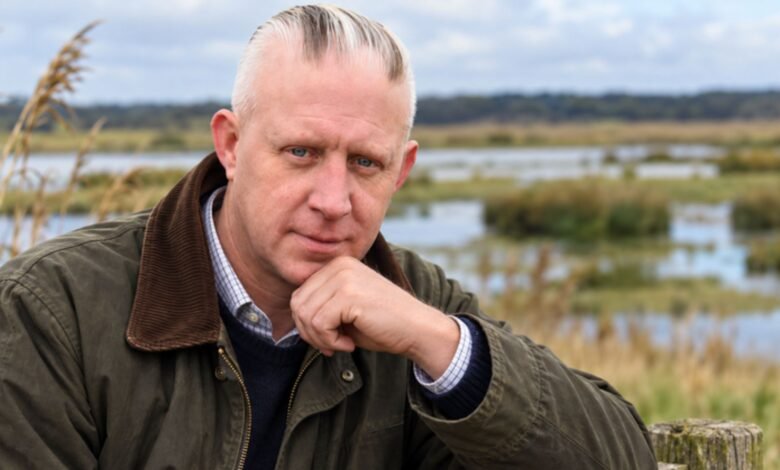
Jacob Fiennes has one of those names that can make a biography look easier than it is. He is the twin brother of actor Joseph Fiennes, the younger brother of Ralph Fiennes, and part of a family containing filmmakers, musicians and actors. But his own career developed far from film sets and premieres. He became a gamekeeper, estate manager, conservationist and author focused on making productive farmland work alongside nature.
That distinction matters more now because Fiennes is no longer simply the little-known brother of two famous actors. His work at Holkham in Norfolk has placed him inside major British conversations about farming, biodiversity, protected areas and species recovery. Holkham continues to identify Jake Fiennes as the conservationist leading its conservation team, while the UK government lists him as a member of the England Species Reintroductions Taskforce.
His 2022 book, Land Healer: How Farming Can Save Britain’s Countryside, also shifted his public profile from estate professional to published commentator. Penguin describes the book as an argument for restoring wildlife through practical land management while continuing to produce food.
BLUF: Jacob Fiennes, professionally known as Jake Fiennes, is Joseph Fiennes’ twin brother and a British conservationist. Born in 1970, he built a career in gamekeeping and estate management before joining Holkham in 2018, where he became a senior conservation leader, author and adviser on nature recovery and farming.
Jacob Fiennes at a Glance
| Profile detail | Verified information |
|---|---|
| Full name | Jacob Mark Twisleton-Wykeham-Fiennes |
| Professional name | Jake Fiennes |
| Born | 27 May 1970, according to biographical records |
| Birthplace | Salisbury, England |
| Twin brother | Joseph Fiennes |
| Older brother | Ralph Fiennes |
| Parents | Mark Fiennes and Jennifer Lash |
| Profession | Conservationist, land manager, author |
| Major base | Holkham Estate, Norfolk |
| Holkham role | General Manager of Conservation / Director of Holkham National Nature Reserve |
| Previous career | Gamekeeper and estate manager |
| Major previous estate | Raveningham Estate |
| Book | Land Healer: How Farming Can Save Britain’s Countryside |
| Published | 2022 |
| Government role | Member of the England Species Reintroductions Taskforce |
| Conservation focus | Habitat restoration, biodiversity, farming and nature recovery |
| Personal life | Married Melanie Plaice; public records identify two children |
The exact date and family details are supported by biographical databases and family records, while the professional roles are more strongly documented by Natural England, the UK government, Holkham and Penguin.
The Fiennes Twin Who Went in the Opposite Direction
Joseph Fiennes and Jacob Fiennes were born on the same day in 1970. Joseph moved toward acting, eventually becoming known for Shakespeare in Love, Elizabeth, Enemy at the Gates and The Handmaid’s Tale. Jacob went in the opposite direction, spending his working life around estates, wildlife, farming and conservation. The Guardian describes him as Joseph’s twin and Ralph’s younger brother
Their wider family helps explain the unusual amount of public curiosity surrounding Jacob. Their father, Mark Fiennes, was a farmer and photographer, while their mother, Jennifer Lash, was a writer. Their siblings include Ralph, Martha, Magnus, Sophie and Joseph. Multiple members entered the arts, while Jacob established himself in environmental work.
Joseph has spoken about the family’s childhood as culturally rich but financially constrained. The children moved frequently while their parents renovated properties for income, and exposure to literature, photography, farming and creative work became part of family life.
Jacob’s eventual career therefore did not emerge from a disconnected world. His father’s farming background and the family’s repeated contact with rural life provided an early connection to land. What changed was the way Jacob chose to work with it.
From Uncertain School Years to Gamekeeper and Estate Manager
Jacob’s route into conservation was not a conventional university-to-profession progression.
A later interview account says he left school at 16 with few formal qualifications, spent time working at a London nightclub and subsequently returned to rural estates. His early practical experience included work at Knepp in West Sussex, where he learned about estate management before eventually moving into gamekeeping.
The Raveningham Estate became one of the decisive chapters. The UK government’s 2019 Landscapes Review described Fiennes as having spent 24 years as estate manager at Raveningham, combining nature conservation with arable farming before taking the senior conservation position at Holkham in autumn 2018.
That history matters because Fiennes’ approach is rooted in working farms rather than treating conservation as something separate from agricultural production.
His philosophy developed around a deceptively practical question: can farms produce food while also producing better conditions for wildlife?
For Fiennes, the answer is yes—but only when farmers actively manage habitats instead of regarding nature as an unwanted by-product of agriculture. Penguin describes his Holkham work as combining habitat restoration with farming, including efforts that brought back wetlands, hedgerows, birds and butterflies across approximately 25,000 acres.
Why Holkham Turned a Gamekeeper Into a National Conservation Voice
Fiennes joined Holkham in 2018 after his long Raveningham career. The estate appointed him General Manager for Conservation with an estate-wide remit, and Holkham’s own history records the beginning of the Great Farm project and sustainable farming trials around the same period.
Holkham National Nature Reserve is substantial: the UK government describes it as an 11-mile stretch of coastline containing dunes, salt marsh, pasture, scrub, pine forest, creeks and marshes. Management is shared between Holkham Estate and Natural England, with the estate responsible for the land it owns within the reserve.
Holkham’s own conservation team says Fiennes works across wetland management, bird counts, habitat protection and habitat creation, while advising senior estate teams on biodiversity projects.
The results have given his philosophy something that many environmental arguments lack: visible field evidence.
During a 2022 Guardian visit, Fiennes pointed to the return of chalkhill blue butterflies at Warham Camp after changes to grazing. The same report highlighted 45 nesting pairs of spoonbills at Holkham in the previous summer, twice the number recorded in earlier years.
“I don’t want to be the Gordon Ramsay of conservation.” — Jake Fiennes
The joke captures something important about his public style. He is blunt, practical and often deliberately informal. His argument is generally less about presenting conservation as a pristine ideal and more about showing that landowners can alter farming decisions to produce better ecological outcomes.
The Holkham Method: Farming and Wildlife as One Operating System
Fiennes does not frame every conservation solution as rewilding. Penguin’s description of Land Healer specifically notes his belief that Britain’s remaining natural spaces have been profoundly shaped by human land use and that restoration needs active management.
His preferred interventions can be relatively ordinary:
- Allowing hedges to grow longer before cutting.
- Reducing unnecessary soil disturbance.
- Leaving field margins for wildlife.
- Restoring or improving wetland habitats.
- Using cover crops.
- Adjusting grazing patterns.
- Maintaining productive agriculture while deliberately creating wildlife habitat.
A Guardian review of Land Healer described these interventions as “small tweaks” that become more consequential when applied together. The review also summarised Fiennes’ position that farmers should be treated as part of the solution rather than simply blamed for ecological decline.
That is the centre of his professional argument: biodiversity can be managed as an output of good farming rather than treated as something that begins only when cultivation stops.
The Government Roles That Confirmed His Wider Influence
Fiennes’ work eventually moved beyond Holkham.
The 2019 Landscapes Review listed him among the advisory figures involved in considering the future of National Parks and Areas of Outstanding Natural Beauty. At the time, the government described his career as combining estate management, arable farming and nature conservation.
In May 2023, Natural England appointed Fiennes to co-chair its National Nature Reserves Steering Group alongside Kim Shillinglaw. The appointment placed him directly within a national programme concerned with some of England’s most important protected sites.
The UK government’s current England Species Reintroductions Taskforce page lists Jake Fiennes as a member. The group provides technical advice on existing and proposed species conservation translocations in England and is intended to support evidence-led nature recovery.
That role is significant because it shows how far his career has moved from his early days as a gamekeeper. His expertise is now relevant to policy questions about how species can return to areas where populations have declined or disappeared.
Land Healer Put Jacob Fiennes’ Philosophy Into Print
Published by Ebury in 2022, Land Healer: How Farming Can Save Britain’s Countryside turned three decades of practical experience into a book-length argument. Penguin records its publication date as 23 June 2022 and identifies Fiennes as Conservation Manager at Holkham.
The book is structured around the agricultural year and combines personal recollection with arguments about food, wildlife, farming and habitat management. Penguin’s description says its central proposition is that Britain needs to repair its relationship with land while maintaining food production.
The book also matters because it corrects an easy assumption about Jacob Fiennes. He is not simply “Joseph Fiennes’ brother who works with animals.” His professional identity is much more specific: he is a land-management practitioner who has spent decades testing how agricultural systems can be modified to improve ecological outcomes.
Penguin’s author profile says his experience has attracted interest from organisations and institutions including the National Farmers’ Union, the National Trust, the RSPB and Natural England.
Read Jake Fiennes’ publisher profile and Land Healer details at Penguin
A Timeline Built Around Work Rather Than Celebrity
| Period | Career development |
|---|---|
| 1970 | Jacob Mark Twisleton-Wykeham-Fiennes is born in Salisbury and later grows up as Joseph Fiennes’ twin. |
| Early adulthood | Leaves formal schooling and experiments with non-rural work before returning to estate life. |
| Early rural career | Gains practical estate experience, including work associated with Knepp in West Sussex. |
| 1990s–2018 | Builds a long career at Raveningham, ultimately serving as estate manager for 24 years. |
| 2018 | Becomes General Manager for Conservation at the 25,000-acre Holkham Estate. |
| 2018 onward | Helps develop Holkham’s Great Farm project and sustainable farming trials. |
| 2022 | Publishes Land Healer: How Farming Can Save Britain’s Countryside. |
| 2023 | Appointed co-chair of Natural England’s National Nature Reserves Steering Group. |
| Current public record | Listed by the UK government as a member of the England Species Reintroductions Taskforce; Holkham continues to identify him as its senior conservation figure. |
Marriage, Family and the Private Side of Jacob Fiennes
Jacob Fiennes has kept his personal life considerably quieter than his siblings’ public careers.
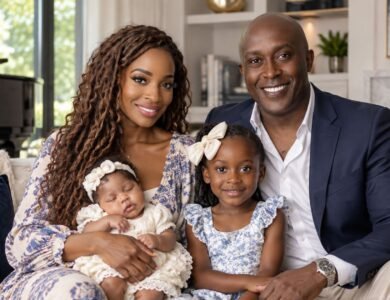
The Peerage records that Jacob married Melanie Plaice in 1999. Biographical records also identify two children from the marriage, although the family has generally remained outside the kind of publicity surrounding Ralph and Joseph Fiennes.
A 2025 El País family profile described Jacob as living a comparatively private rural life with his wife and children and identified Melanie as a veterinarian.
The distinction between verified family information and internet invention is important here. There is considerable public curiosity about Jacob precisely because so little of his private life has been marketed through interviews, premieres or celebrity coverage.
His relevance does not depend on revealing more.
It comes from the professional record.
Jacob Fiennes’ Financial Position: What Can Actually Be Verified?
There is no authoritative public figure for Jacob Fiennes’ personal net worth.
That conclusion is more defensible than repeating the precise valuations found on celebrity-finance websites. No audited personal accounts, credible financial publication, official asset declaration or reliable public filing located for this profile establishes a total personal fortune.
His professional position is documented. His income is not.
He has held senior conservation and estate-management roles, written a commercially published book and served in advisory positions connected with nature recovery. None of those facts provides enough information to calculate his personal wealth.
The same caution applies to property. The scale of Holkham Estate should not be confused with property personally owned by Jacob Fiennes. His professional responsibility for land does not establish personal ownership.
The accurate financial answer is therefore simple: Jacob Fiennes’ net worth is currently unverified and should not be assigned a numerical estimate.
The Broader Fiennes Family Makes Jacob’s Story More Interesting, Not Less
It is tempting to describe Jacob through his siblings because the names are familiar.
Ralph Fiennes became a major film actor. Joseph Fiennes established a long screen and stage career. Martha Fiennes became a director, Sophie Fiennes a documentary filmmaker and Magnus Fiennes a composer.
But Jacob’s career provides an unusually clear counterpoint.
The same family produced a group of creative professionals whose working environments include cinemas, theatres, editing rooms and recording studios. Jacob’s has included wetlands, farms, gamekeeping, grazing systems and conservation projects.
The shared family connection is real. The shared profession is not.
That is why the phrase “Joseph Fiennes’ brother” is useful for finding Jacob, but insufficient for explaining him.
Why Jacob Fiennes Matters Beyond the Fiennes Name
There is a larger reason his career attracts attention.
British farming policy increasingly asks landowners to deliver several outcomes at once: food, biodiversity, water management, access, climate benefits and healthier soils. Fiennes’ work represents one practical response to that tension. Rather than removing farming from conservation, he argues that farming itself can be redesigned to create more room for wildlife.
The evidence from Holkham gives that argument a physical setting. The work concerns actual fields, grazing, ditches, hedgerows, marshes and species—not just policy language.
That practical emphasis is also what separates Fiennes from celebrity conservation commentary. His authority comes largely from decades spent managing land and trying things that either work or fail in the field.
And that may ultimately be the most interesting part of Jacob Fiennes’ story.
He did not need to become another actor.
He became an agricultural and conservation practitioner whose surname opened the search result, but whose work keeps the reader there.
People Also Ask About Jacob Fiennes
Who is Jacob Fiennes?
Jacob Fiennes, professionally known as Jake Fiennes, is a British conservationist, land manager and author. He is Joseph Fiennes’ twin brother and Ralph Fiennes’ younger brother. His career moved from gamekeeping and estate management into large-scale conservation work at Holkham in Norfolk, where he has become involved in habitat restoration, farming, protected areas and national nature-recovery policy.
Is Jacob Fiennes Joseph Fiennes’ twin brother?
Yes. Jacob Fiennes is Joseph Fiennes’ twin brother. The pair were born in 1970 and followed very different professional paths. Joseph became an internationally recognised actor, while Jacob developed a career in gamekeeping, estate management and conservation. The Guardian explicitly identifies Jacob as Joseph’s twin and Ralph Fiennes’ younger brother.
What does Jacob Fiennes do for a living?
Jacob Fiennes is a conservationist and land manager. His principal professional base is Holkham in Norfolk, where Holkham identifies him as the senior conservation figure leading work on habitat protection, wetland management, bird monitoring and biodiversity projects. The UK government also lists him as a member of the England Species Reintroductions Taskforce.
Where does Jacob Fiennes work?
Jacob Fiennes works at the Holkham Estate and Holkham National Nature Reserve in Norfolk. He joined Holkham in 2018 after a 24-year career at Raveningham Estate. Government documents identify him as General Manager for Conservation of Holkham’s approximately 25,000-acre estate, while Natural England has also appointed him to national conservation leadership roles.
What book did Jacob Fiennes write?
Jacob Fiennes wrote Land Healer: How Farming Can Save Britain’s Countryside, published by Ebury in 2022. The book combines his practical experience in farming and conservation with an argument for wildlife-friendly agricultural management. Penguin describes it as a case for restoring habitats and biodiversity while continuing to produce food.
What is Jacob Fiennes’ net worth?
Jacob Fiennes’ net worth is not publicly verified. Although his senior conservation position, advisory work and published book demonstrate an established professional career, no authoritative financial source provides a defensible total for his personal assets, earnings or investments. Numerical net-worth estimates published without supporting financial evidence should therefore be treated as speculation.
The Real Legacy of Joseph Fiennes’ Lesser-Known Twin
Jacob Fiennes began with a famous surname, but fame was never the central mechanism of his career.
His story runs through Raveningham, Knepp, Holkham and the wider British conservation system. It includes gamekeeping, estate management, farming trials, habitat restoration, protected-area leadership and a book arguing that agriculture can become part of the answer to ecological decline.
That makes the phrase “Joseph Fiennes’ brother” both accurate and incomplete.
It explains why people discover Jacob.
It does not explain why government bodies, conservation organisations, farmers and land managers now pay attention to what he says.
The strongest evidence points to a quieter distinction: Joseph Fiennes built his public career in front of cameras, while Jacob Fiennes built his through the management of real land and the species living on it.
That is a very different form of recognition—and one that exists independently of the Fiennes family name.
Sources & Verification
- Holkham Estate — Conservation: Holkham’s current conservation page identifies Jake Fiennes as the conservation team leader and describes his work in wetlands, bird monitoring, habitat creation and biodiversity.
- GOV.UK — England Species Reintroductions Taskforce: Current government material lists Jake Fiennes as a taskforce member.
- GOV.UK — Landscapes Review: The government’s review records his 24-year Raveningham career and appointment to Holkham in 2018.
- Penguin — Land Healer: Publisher information verifies the 2022 book, Holkham role and professional background supplied by the publisher.
- The Guardian — Jake Fiennes profile: Detailed reporting on his work at Holkham, family connection to Joseph and Ralph, conservation methods and field results.
- The Guardian — Land Healer review: Context on Fiennes’ career, farming philosophy and transition from gamekeeping to conservation leadership.
- Natural England / GOV.UK: 2023 appointment of Jake Fiennes as co-chair of the National Nature Reserves Steering Group.
- The Peerage and biographical family records: Supporting documentation for Jacob Fiennes’ family and marriage history.
Editorial Disclaimer
This biography distinguishes documented information from estimates and repeated online claims. Jacob Fiennes’ private financial position, personal assets and other non-public matters have not been assigned speculative values. Professional titles can change, and this article reflects the most reliable public information available at the time of verification.
One Comment