Alan James Blethyn: The Private Story Behind Brenda Blethyn’s First Marriage—and What the Record Actually Reveals
He has remained largely outside the spotlight, but one brief marriage helped shape the turning point that sent Brenda Blethyn from British Rail to the stage.

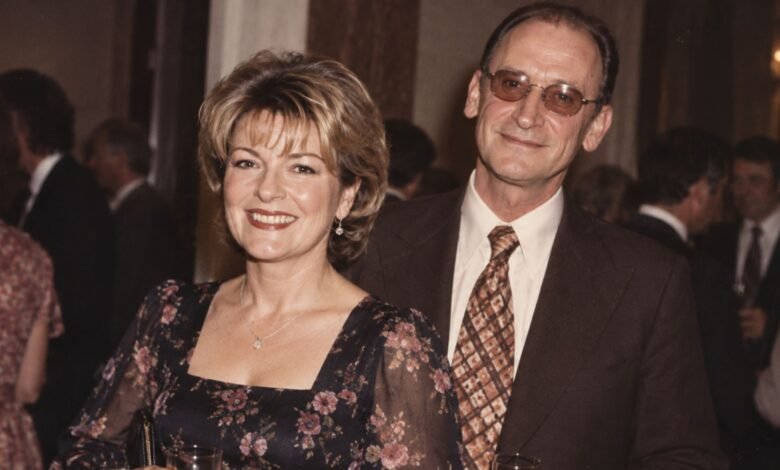
Brenda Blethyn is back in the public conversation in 2026. After finishing her long run as DCI Vera Stanhope, the acclaimed actor moved into Channel 4’s new adaptation of A Woman of Substance—and on June 22, 2026, Channel 4 confirmed that she will return for a second series. That renewed attention has naturally pushed interest back toward the years before the awards, the cameras and Vera.
One name keeps surfacing in that earlier chapter: Alan James Blethyn, Brenda Blethyn’s first husband. He was not an actor or a public celebrity. He is generally described in biographical sources as a graphic designer, and the strongest accounts place his meeting with Brenda around her years working for British Rail.
What makes Alan James Blethyn interesting is not a hidden entertainment career that can be uncovered with enough digging. It is the opposite. The public record is unusually narrow. Brenda herself has spoken about the marriage, its painful ending and the effect it had on her life, while remarkably little reliable information survives in public sources about Alan’s later years.
Alan James Blethyn is the graphic designer who became Brenda Blethyn’s first husband after they met through British Rail. They married when Brenda was young, and the marriage ended in 1973 after he fell for another woman. Authoritative public records reveal little about Alan’s later life, finances, or career.
The man behind the Blethyn surname
The name “Blethyn” is now inseparable from one of Britain’s best-known actors, but Brenda Blethyn was born Brenda Anne Bottle in Ramsgate, Kent, on February 20, 1946. She did not enter acting as a teenager with a ready-made career plan. She worked, first in office and clerical jobs and later at British Rail, where amateur dramatics gradually changed the direction of her life.
Alan James Blethyn entered that story before Brenda was famous.
Multiple biographical accounts identify him as a graphic designer, while reporting on Brenda’s early years consistently places their meeting in connection with her work at British Rail. The Independent described British Rail as the place where Brenda met and married the man whose surname she would continue to use professionally.
That detail matters more than it might appear.
Brenda did not discard the surname when the marriage ended. She kept Blethyn as her professional identity, meaning Alan’s surname eventually became the name millions of viewers associated with one of Britain’s most respected actresses.
In other words, Alan Blethyn did not become famous because of his own public career. His name became famous because Brenda carried it forward.
A marriage remembered through Brenda’s own words
The most dependable material about Alan’s marriage comes from Brenda herself.
In a 2013 Guardian interview, Blethyn said her first husband “just fell for someone else.” She described herself as devastated when he left, but she also made a point of saying that he was a lovely man and that she still had affection for him.
That account is important because it removes a great deal of the drama that later celebrity biographies can introduce.
There is no reliable evidence in the strongest sources that the breakup was a scandal, a public feud or a prolonged celebrity battle. Brenda’s own description is simpler: the marriage ended because Alan fell in love with another woman.
The Independent reported essentially the same sequence. Its 2011 interview with Blethyn records that the marriage collapsed in 1973, just as Brenda was preparing to move from amateur acting into formal drama training.
The emotional significance becomes clearer when the timeline is placed beside Brenda’s career decisions.
She was not leaving one life for another from a position of security. She was dealing with the end of her marriage while also considering whether to abandon a stable working life and attempt professional acting.
That combination made 1973 a decisive year.
The exact wedding year is less settled than many biographies suggest
This is one area where the public record deserves a careful qualification.
Findmypast’s family-history profile dates Brenda Blethyn’s marriage to Alan James Blethyn to 1964, with the marriage ending in 1973.
Other secondary databases are inconsistent. IMDb, for example, lists Alan James Blethyn as a spouse beginning in 1966, while Encyclopedia.com also gives 1966 as the marriage year and 1976 as the divorce year.
Brenda’s own recollections add another wrinkle. In the Guardian in 2013, she said she married for the first time at 19. In another Guardian profile published in 2016, she was described as having married at 18.
The safest conclusion is therefore not to manufacture precision.
Most sources place the marriage in the mid-1960s, with 1964 appearing in genealogy-based reporting, while some databases use 1966. The ending in 1973 is much more consistently supported.
That distinction is a useful example of what responsible celebrity biography should look like: report what is strong, flag what is inconsistent and avoid turning a database discrepancy into a false certainty.
British Rail was more than a workplace in this story
British Rail appears repeatedly in accounts of Brenda Blethyn’s early adulthood because it connects three major pieces of her history: work, marriage and acting.
Blethyn worked for the organisation in a secretarial role and took part in its amateur theatrical activities. The Independent noted that she met Alan there, while later interviews described how the amateur group helped convince her that acting might be more than a hobby.
This was not a straightforward leap into celebrity.
Brenda had already built a conventional working life before drama school. When the marriage broke down, she was 27 and confronting a choice that could have gone in either direction. The Guardian records her saying that she left her secretarial job with British Rail and went to drama school at 27, initially keeping the decision from her parents because she feared they might think she had made a foolish choice.
Her memoir, Mixed Fancies, published by Simon & Schuster in 2006, gives a first-person account of the life and career that followed. Google Books confirms the publication and its 310-page format.
The marriage, then, was not merely a biographical footnote before Brenda became famous. Its ending coincided with one of the most consequential professional decisions of her life.
1973: heartbreak, independence and the beginning of another life
The chronology around 1973 is extraordinary for its compression.
Brenda’s marriage was collapsing. She was leaving British Rail. She had been encouraged by people around her to think seriously about acting. And she was preparing to enter the Guildford School of Acting.
The Guardian described the transition as one that followed the breakup of her first marriage. The Independent likewise reported that the marriage collapsed just as she had been accepted for drama school.
That is where Alan James Blethyn’s role in Brenda’s story becomes historically significant without being professionally public.
He was not the person who built her acting career. But the end of their marriage formed part of the circumstances in which she committed herself fully to one.
Blethyn later spoke of the pain without bitterness. Her ability to describe Alan as a lovely man even after being left is one of the clearest pieces of evidence available about how she eventually understood the marriage.
The most responsible biography of Alan Blethyn is one that stops where the evidence stops. His importance is clear; his later life is not.
That may sound like a limitation. In practice, it is the most revealing conclusion the record allows.
Why Brenda never dropped the surname after the divorce
For a public figure, a surname can become a professional asset in its own right.
Brenda did not revert to Bottle after her divorce. She continued professionally as Brenda Blethyn. The Independent explicitly noted that she met and married Alan Blethyn and continued to carry his surname, while other profiles likewise state that she retained the Blethyn name as her stage name.
That choice created a lasting historical connection between them.
By the time Blethyn became internationally known for Secrets & Lies, Little Voice, Pride & Prejudice and later Vera, the name “Blethyn” had become a professional identity completely associated with her own body of work.
Her 1997 Academy Award nomination for Secrets & Lies is one marker of how far that name had traveled. The Academy’s official record confirms Blethyn’s nomination for Best Actress for the film. BAFTA’s official 1997 awards archive records her win for Leading Actress for the same performance.
Alan’s surname survived in a very public way even though Alan himself remained outside that public world.
The long silence after divorce is itself part of the story
Search for Alan James Blethyn and the pattern becomes apparent quickly.
There are repeated references to his marriage to Brenda, his occupation as a graphic designer and the circumstances surrounding the breakup. But there is no comparable body of authoritative reporting about his later career, later residences, wealth, death, subsequent relationships or public activities.
That absence matters.
It means readers should be skeptical of any biography that suddenly supplies an exact birth date, detailed career history, elaborate business interests or a precise net worth for Alan James Blethyn without pointing to a credible primary source.
A name appearing on hundreds of websites does not mean the underlying information has been independently verified.
For Alan, the reliable record is unusually concentrated around one period: his marriage to Brenda and the transition that followed it.
What happened after Alan and Brenda went their separate ways?
Brenda moved forward into acting.
She trained at the Guildford School of Acting and moved onto the London stage in the 1970s, eventually joining the National Theatre. By the 1990s, her film career had accelerated dramatically, culminating in the BAFTA-winning and Oscar-nominated performance in Secrets & Lies.
The later chapters of her personal life also developed in a different direction.
Brenda formed a long-term relationship with Michael Mayhew, an art director, and the pair eventually married in 2010 after decades together. Brenda discussed that relationship openly in her Guardian interviews, contrasting its longevity with the far shorter first marriage.
Importantly, Brenda’s public remarks do not portray Alan as a lifelong antagonist. Quite the reverse. Even when discussing the hurt of the divorce, she spoke of him warmly.
That makes the phrase “Brenda Blethyn’s ex-husband” factually correct but emotionally incomplete.
Alan was her first husband, but Brenda herself appears to have regarded the relationship as one chapter of a larger life rather than a permanent grievance.
Alan James Blethyn’s place in the story makes more sense beside Brenda’s later achievements
The contrast is striking.
In the mid-1960s, Alan was the husband of a young woman working at British Rail.
In the early 1970s, the marriage was over.
By the mid-1970s, Brenda was entering professional theatre.
By 1997, she was a BAFTA-winning actress and an Academy Award nominee for Secrets & Lies.
By 2011, she was leading ITV’s Vera as DCI Vera Stanhope.
By 2025, she had completed her final run as Vera after 14 years and 56 episodes. ITV’s reporting on the farewell event in Newcastle described the series as having run for 14 years, while ITV’s own 2024 press release confirmed the final series decision.
And in 2026, she remained firmly employed, starring in A Woman of Substance. Channel 4 confirmed in June that the drama would return for a second series, with Blethyn and Jessica Reynolds reprising their roles.
Seen against that arc, Alan’s role is highly specific: he belongs to the pre-fame period of Brenda Blethyn’s biography, at the moment when a conventional life was giving way to an acting career.
The 2026 reason this old marriage is suddenly relevant again
There is a contemporary reason to revisit a relationship that ended more than half a century ago.
Brenda Blethyn remains active at an age when many actors have already retired. In January 2026, reporting based on her interview with Prima noted that she had no immediate plans to retire. She had completed Vera but was continuing to work and had taken on A Woman of Substance.
Then Channel 4 announced that A Woman of Substance would return for a second series in June 2026.
That kind of renewed visibility brings renewed attention to an actor’s earlier life. And in Brenda’s case, the first marriage matters because it sits directly beside the decision to leave British Rail, study acting and build the career that followed.
Alan therefore remains relevant not because he has re-entered public life, but because the story people are revisiting still passes through him.
A compact record of the Alan James Blethyn timeline
| Period | What the available evidence supports |
|---|---|
| Early 1960s | Brenda Blethyn is working in clerical employment and becomes involved in British Rail’s amateur theatre activities. |
| Mid-1960s | Brenda marries Alan James Blethyn. Findmypast gives 1964; other databases give later dates, so the exact year should be treated cautiously. |
| 1973 | The marriage ends. Brenda says Alan fell in love with another woman. |
| Age 27 | Brenda leaves her secretarial career and enrolls at the Guildford School of Acting. |
| 1976 | Brenda begins her professional stage career and joins the National Theatre company. |
| 1997 | Brenda wins the BAFTA for Leading Actress for Secrets & Lies and receives an Academy Award nomination. |
| 2010 | Brenda marries Michael Mayhew after their long relationship. |
| 2025 | Brenda completes her final run as DCI Vera Stanhope after 14 years on ITV’s Vera. |
| 2026 | Channel 4 confirms Brenda’s return for series two of A Woman of Substance. |
Financial trajectory: what can actually be established
There is no authoritative public net-worth figure for Alan James Blethyn.
No credible financial publication, audited disclosure or transparent public asset record located in the strongest available sources establishes his personal wealth, income, property holdings or investments. Online figures that claim an exact number should therefore be treated as unverified estimates rather than established fact.
That distinction is particularly important because Alan was never a celebrity whose finances were routinely reported.
The same caution applies to attempts to infer his wealth from Brenda’s later success. Her awards, decades of work and substantial screen career say nothing reliable about Alan’s individual assets.
Verified financial position: Alan James Blethyn’s personal net worth is currently unverified.
What the record does—and does not—tell us about Alan James Blethyn
Was Alan James Blethyn a graphic designer?
Alan James Blethyn is identified in multiple secondary biographical sources as a graphic designer. The public record also connects his meeting with Brenda Blethyn to her employment at British Rail. Beyond that basic professional description, there is not enough strong evidence to reconstruct a detailed design career with confidence.
When did Alan James Blethyn marry Brenda Blethyn?
Alan James Blethyn married Brenda Blethyn in the mid-1960s. Findmypast dates the wedding to 1964, while IMDb and Encyclopedia.com use 1966. Brenda herself recalled marrying young, at around 18 or 19. The marriage’s end in 1973 is much more consistent across sources.
Why did Alan Blethyn and Brenda Blethyn divorce?
Brenda Blethyn has said that Alan fell in love with another woman, which brought their marriage to an end in 1973. She described the experience as devastating at the time but later spoke about Alan with affection and explicitly rejected a hostile portrayal of him.
Did Brenda Blethyn keep Alan’s surname after the divorce?
Yes. Brenda kept the Blethyn surname as her professional name after the marriage ended. The name became the identity under which she later built her stage, film and television career, including her Oscar-nominated work in Secrets & Lies and her long-running role in Vera.
Did Alan James Blethyn have children with Brenda?
There were no children from Brenda Blethyn’s marriage to Alan James Blethyn. Findmypast’s family-history profile states that Brenda married twice and had no children, while Brenda herself said in the Guardian that she did not regret not having children.
What happened to Alan James Blethyn after the divorce?
Alan James Blethyn’s later life is poorly documented in authoritative public sources. Reliable reporting focuses overwhelmingly on his marriage to Brenda, his identification as a graphic designer and the 1973 breakup. There is not enough strong evidence to responsibly state his later employment, wealth, death date, residence or subsequent family life as fact.
Related reading
For another fact-checked profile of a private spouse whose public identity is closely connected to a better-known actor, see Ian Rumsey: Kate Garraway’s Ex-Husband and the ITV Career That Took Him to the Top of British Television.
The name survived; the public biography did not
Alan James Blethyn occupies an unusual position in British entertainment history.
He is not remembered for a body of public work. He is not a screen celebrity, award winner or media personality. His place in the record is narrower and more personal: he was Brenda Blethyn’s first husband, a graphic designer she met around the British Rail years, and the man whose departure coincided with the moment she began remaking her life around acting.
That was enough to leave a permanent mark.
Brenda kept his surname. She carried it into the National Theatre, into Mike Leigh’s Secrets & Lies, through Oscar and BAFTA recognition, across 14 years of Vera, and into her 2026 work for Channel 4.
Yet the remarkable part of Alan’s biography is how little of it belongs to the public record.
There is no responsible reason to fill that silence with invented wealth figures, dramatic rumors or unsupported claims about his later years. The evidence gives us a clear beginning, a painful ending and a surname that outlived the marriage by decades.
That is where the story should stop—and where the facts are strongest.
Sources & Verification
- The Guardian, “Brenda Blethyn: My family values” — first-person comments from Blethyn about Alan, the divorce, British Rail and her later marriage.
Read the Guardian interview - The Independent, “Brenda Blethyn turns TV detective in Vera” — reporting on the British Rail years, Alan Blethyn and the 1973 marriage breakdown.
Read the Independent profile - Findmypast, “Take a step back in time and investigate Brenda Blethyn’s family tree” — genealogy-focused reporting that dates the Alan James Blethyn marriage to 1964 and the end of the marriage to 1973.
Read the Findmypast family history research - Google Books, Mixed Fancies: A Memoir by Brenda Blethyn — publication record for Blethyn’s 2006 autobiography, a key first-person source for her life story.
View the memoir record on Google Books - BAFTA, 1997 Film Awards — official record of Brenda Blethyn’s Leading Actress win for Secrets & Lies.
View BAFTA’s 1997 awards record - Academy of Motion Picture Arts and Sciences, 1997 Academy Awards — official record of Blethyn’s Best Actress nomination for Secrets & Lies. (Oscars)
View the official 1997 Oscars record - ITV Press Centre, final series of Vera — official announcement of Blethyn’s final series as DCI Vera Stanhope.
Read ITV’s Vera final-series announcement - Channel 4, June 22, 2026 announcement for series two of A Woman of Substance — confirms Blethyn’s continued work in 2026.
Read Channel 4’s 2026 announcement
Editorial Disclaimer
This article distinguishes verified reporting from incomplete or conflicting secondary records. Information about Alan James Blethyn is substantially less documented than information about Brenda Blethyn. Exact details that cannot be established with sufficient authority—including his complete later biography, personal finances, and some chronology around the marriage—have not been presented as fact. Estimates and unsupported claims have been excluded.
One Comment