Kate Firth: The Quiet Career of Colin Firth’s Sister Who Helped Shape The King’s Speech
Behind one of Colin Firth’s most famous performances was a sister whose own career was built around the science, psychology and craft of the human voice.

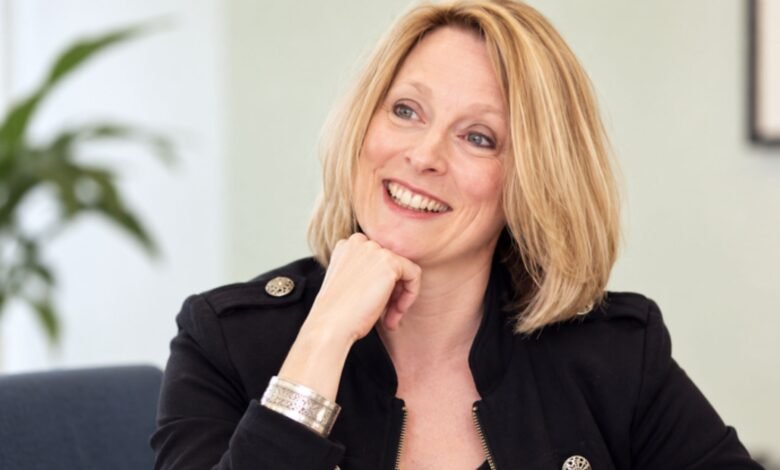
Kate Firth occupies an unusual place in British acting history. She is best known publicly as Colin Firth’s sister, yet her professional record is much broader: she trained as an actress, became a specialist voice coach, studied counselling and psychology, taught performers, broadcasters and executives, and worked on The King’s Speech, the film that won her brother the Academy Award for Best Actor.
That connection gives her story particular weight. Kate was not simply adjacent to Colin Firth’s career because they happened to share a family. Her expertise in voice, speech and communication directly intersected with the performance that became one of the defining roles of his career. The Central School of Speech and Drama’s alumni material identifies Kate Firth, Annie Morrison and Neil Swain among the voice professionals who coached Colin while he prepared to play King George VI.
At the same time, Kate Firth’s own professional identity is easy to miss because her work has mostly happened behind the scenes. Her current professional profile describes more than two decades of coaching actors, broadcasters, executives, doctors, teachers and other professionals, with work spanning voice, communication, leadership and personal impact.
BLUF: Kate Firth is a British voice and executive communication coach and former stage actress, best known publicly as Colin Firth’s younger sister and as one of the voice professionals involved in his preparation for The King’s Speech. Born in Nigeria in 1962, she built a career combining performance, voice studies, psychology, counselling and applied linguistics.
Kate Firth at a Glance
| Detail | Verified information |
|---|---|
| Full name | Kate Firth |
| Birth year | 1962 |
| Birthplace | Nigeria |
| Nationality | British |
| Best known as | Colin Firth’s sister; voice and executive communication coach |
| Professional background | Former actress, voice coach, executive leadership coach |
| Major screen connection | The King’s Speech |
| Siblings | Colin Firth and Jonathan Firth |
| Current base | Winchester, England |
| International work | London, Spain, internationally and online |
| Core specialisms | Voice, speech, communication, leadership, performance, applied linguistics |
| Major teaching experience | Royal Central School of Speech and Drama, Bristol Old Vic Theatre School, Bath Spa University and Institute of Arts Barcelona |
| Publicly verified personal fortune | Not available |
Kate’s official professional biography says she is currently based in Winchester and works with organisations and individuals in London, internationally and online. Her site also describes her as a voice and executive communication coach with a background in voice and speech, Psychosynthesis psychology, physiology, counselling and applied linguistics.
A family built around education before fame arrived
The Firth siblings did not grow up in a conventional show-business household.
Colin Firth’s family background was strongly academic. His father, David Norman Lewis Firth, was a history lecturer and worked in education in Nigeria, while his mother, Shirley Jean Rolles, was a comparative religion lecturer. Colin was the eldest of three children, with Kate followed by younger brother Jonathan Firth.
Kate was born in Nigeria in 1962. Accounts of the family describe a childhood shaped by movement between countries and cities, including Nigeria, England and a period in St. Louis, Missouri. That international background later became a useful thread through a career that included work in Britain, the United States and Spain.
The family’s professional pattern is striking. Colin became an internationally recognised actor. Jonathan also built a screen and stage career. Kate moved toward the same world first through acting and later through specialist voice work. Her own account of the siblings shows that the theatrical impulse was present early, even when conventional academic expectations pulled in another direction.
In a published sibling interview reproduced in educational materials, Kate described Colin as protective when they were young and recalled admiring his confidence. She also said she desperately wanted to act but felt less courageous about committing to drama school, while both she and Colin believed that acting could eventually become a real career.
That detail matters because it explains the apparent contradiction at the centre of Kate’s biography: she entered the performing arts, but her eventual career became less about being seen and more about helping other people communicate.
The acting career came first — the coaching career grew from it
Kate Firth’s professional path began in performance.
Available biographies credit her with stage work including Hedda Gabler, The Merchant of Venice, Three Days of Rain, The Taming of the Shrew and Dutchman. Her professional background also included acting work associated with the Royal National Theatre and the Bridge Theatre Company.
But acting appears to have been only the first stage of a broader professional development.
Kate’s later qualifications reveal a deliberate movement toward voice, psychology and communication. Her current biography lists an MA in Psychosynthesis Psychology, a postgraduate certificate in Therapeutic Counselling, a postgraduate diploma in Voice Studies, qualifications in NLP and anatomy and physiology, a diploma in teaching English as a second language, postgraduate study in applied linguistics and a BA in Drama and Spanish.
The combination is unusual. Voice coaching is often presented narrowly as diction, pronunciation or accent work. Kate’s professional material describes something broader: the relationship among voice, body, emotion, thought, confidence and communication.
That approach is visible in the way she works with actors. Her current coaching material covers breath, resonance, vocal range, projection, diction, text and dialogue, character development, accent work, ear training and vocal stamina. For non-actors, she also works on presentation, leadership, communication and professional presence.
The Colin Firth connection became much bigger than a family anecdote
The most searched question surrounding Kate Firth is simple: what did Colin Firth’s sister have to do with The King’s Speech?
The answer is substantial.
When Colin Firth prepared for his role as King George VI in Tom Hooper’s 2010 film, he worked with professional voice coach Neil Swain. Kate Firth, already an experienced voice professional, also contributed to his preparation. The Christian Science Monitor reported in 2011 that Kate gave her brother insight into the difficulties associated with speech impairment and helped develop physical exercises connected with the film’s depiction of Lionel Logue’s methods.
The Central School of Speech and Drama’s alumni newsletter provides an important additional piece of evidence. It lists Kate Firth, identified as a former voice student, alongside Annie Morrison and Neil Swain as professionals who coached Colin Firth in preparing for the stammering role of King George VI.
That distinction is important. Kate was not the sole voice coach on the production, and describing her as the only person responsible for Colin Firth’s voice preparation would be inaccurate. The record instead shows a collaborative coaching process in which she played a meaningful role alongside other specialists.
Why her contribution made sense
Kate’s expertise was especially relevant because The King’s Speech required more than an actor simply imitating a stammer.
The performance depended on physical behaviour, rhythm, breath, hesitation, muscular tension and the psychological experience of struggling to produce speech. Those areas overlap directly with the specialist fields Kate lists in her professional biography: voice and speech, physiology, counselling, psychology and applied linguistics.
Colin Firth later became closely associated with the role, winning the Academy Award for Best Actor for portraying George VI. But the public attention on the finished performance can obscure the technical work that happened before the cameras rolled. Kate’s involvement offers a behind-the-scenes explanation for why her name periodically reappears whenever people examine the preparation for The King’s Speech.
Kate Firth’s relevance to The King’s Speech is strongest when understood as professional expertise rather than celebrity family trivia: she was a trained voice specialist whose knowledge intersected directly with the demands of Colin Firth’s performance.
Her qualifications reveal the real shape of the career
The easiest way to misunderstand Kate Firth is to describe her as simply “Colin Firth’s sister and a voice coach.”
Her published qualifications tell a much richer story.
| Area | Documented training or experience |
|---|---|
| Drama | BA in Drama and Spanish |
| Voice | Postgraduate Diploma in Voice Studies |
| Psychology | MA in Psychosynthesis Psychology |
| Counselling | PG Certificate in Therapeutic Counselling |
| Linguistics | MA-level study in Applied Linguistics |
| Language teaching | Diploma in Teaching English as a Second Language |
| Body and voice | Anatomy and Physiology studies |
| Communication | NLP training and executive communication coaching |
| Higher education teaching | Voice/text teaching in British and Spanish institutions |
Her current professional biography says she has taught voice at the Royal Central School of Speech and Drama, Bristol Old Vic Theatre School, Bath Spa University and the Institute of Arts Barcelona. She has also worked in broadcast training and with organisations across the public, corporate, arts and charitable sectors.
The result is a career that sits between several disciplines. She can work with an actor on Shakespeare, with a broadcaster on microphone technique, or with a senior professional on executive presence and public speaking. Her own site explicitly presents voice as a central part of leadership, communication and identity rather than merely pronunciation.
From theatre classrooms to broadcasters, hospitals and business leaders
Kate’s client history suggests that her professional life expanded considerably beyond entertainment.
Her official client page says she has more than 20 years of experience coaching actors on stage and screen as well as teachers, nurses, doctors, politicians, business executives, poets, writers and broadcasters. It names organisations and institutions including the British Museum, Guy’s and St Thomas’ Hospital Trust, the Financial Ombudsman, the Civil Service, the King’s Fund, Motability and Eco Age.
Her broadcaster-focused work includes voice projection, breath control, vocal expressivity, clarity, posture, microphone technique, script editing and performance for radio and television. The same professional material describes work with broadcasters and presenters connected with ITV, Channel 4 and BBC television and radio.
This is a significant shift from her early stage career. Kate’s work increasingly became about helping other people make their voices effective — literally and professionally.
She has also taught performers in multiple institutional settings. The Royal Shakespeare Company has published a former student’s recollection identifying Kate as his voice teacher during training linked to Bristol Old Vic Theatre School.
Her footprint is therefore much wider than the Firth family itself.
The Firth siblings share a theatrical instinct, but not the same career
There is a natural temptation to view the three Firth siblings as variations of the same story.
That is only partly true.
Colin Firth built the most internationally visible screen career, becoming associated with Pride and Prejudice, Bridget Jones’s Diary, Love Actually, A Single Man and The King’s Speech. Jonathan Firth developed a separate acting career across television, theatre and film. Kate entered acting as well, but gradually moved toward voice coaching, communication training and psychology.
The pattern is less “three actors from one family” and more “three professionals shaped by a common performance culture.”
For Kate, the spoken word eventually became her central professional medium. That makes her relationship with Colin particularly interesting: brother and sister ended up working in closely connected professional territory, but from different sides of the process.
Colin stood in front of the camera. Kate often worked beside or behind the performer, examining how voice, body, emotion and intention could combine.
Kate Firth’s timeline moves from performer to specialist
1962 — Birth in Nigeria
Kate Firth was born in Nigeria in 1962 into the academic family of David Norman Lewis Firth and Shirley Jean Rolles. Her older brother Colin had been born in 1960, while Jonathan was born later in 1967.
Early adulthood — Acting ambitions
Kate studied drama and initially pursued acting. Accounts of her sibling relationship with Colin indicate that she had wanted to act herself while watching her brother commit more decisively to drama school and performance.
1980s–1990s — Acting and voice training
Her documented professional development included stage work followed by specialist study in voice. Existing biographies associate her with theatre companies and productions including Hedda Gabler and The Merchant of Venice.
1990s — International experience
Kate’s biography records study in the United States and later a return to Britain after time in California. This period contributed to the international character of her later professional work.
1996 — Voice studies qualification
The Central School of Speech and Drama alumni record identifies Kate as a Dip Ed Voice graduate from 1996.
2010 — The King’s Speech
Kate joined Neil Swain and Annie Morrison among the voice professionals involved in preparing Colin Firth for his portrayal of King George VI.
2011 onward — Expanded communication work
Her professional identity increasingly encompassed executive communication, leadership coaching, psychology and work with organisations as well as performers. Her present professional site describes more than two decades of coaching experience.
2020s — Winchester base with international work
Kate’s current site states that she is based in Winchester and works with clients in London, internationally and online. It also records recent teaching work at the Institute of Arts Barcelona.
What Kate Firth is doing now
Kate Firth remains professionally active as a voice and executive communication coach.
Her current work spans several groups. Actors can receive coaching in vocal technique, character, classical text, accents and dialects. Broadcasters can work on presentation, microphones, scripts and vocal clarity. Organisations can use her services for communication, leadership, persuasive speaking and professional presence.
Her professional biography also indicates recent teaching activity in Barcelona and continued international and online work from her Winchester base.
That current profile is worth emphasising because it separates Kate’s career from the common “former actress turned celebrity sibling” description. Her present identity is fundamentally that of a specialist communication professional.
Her own website also lists clients and testimonials from fields far removed from film acting, underscoring how broadly her coaching practice has developed.
Why Kate Firth’s private life remains difficult to document
Kate Firth is a public professional, but she is not a high-volume celebrity subject.
That distinction creates a large gap between what can be verified and what biography websites sometimes imply. Reliable sources establish her birth year, professional background, family relationship to Colin and Jonathan Firth, education, coaching work and involvement with The King’s Speech. They do not provide a comprehensive public account of every aspect of her marriage, children, finances or private day-to-day life.
For that reason, precise claims about a spouse, children, private property or lifestyle should not be repeated without strong sourcing.
Even her date of birth illustrates the problem. The established public record supports 1962 as her birth year, but not a reliably sourced day and month. Publishing an exact January 1 birthday merely because some databases use it would turn an incomplete record into false precision.
That restraint is especially important with a figure whose public relevance comes partly through another famous person. The absence of a documented detail does not mean the detail does not exist; it means it is not responsibly established for publication.
Financial picture: why Kate Firth’s net worth cannot be responsibly calculated
Kate Firth’s personal net worth is not publicly verified.
There is no authoritative financial disclosure, audited wealth statement or credible financial publication establishing a precise figure for her assets, annual income or personal fortune. Her professional website documents a substantial coaching practice and a wide range of clients, but those facts do not reveal her earnings.
Online estimates should therefore be treated with caution.
In particular, Colin Firth’s wealth cannot be used as a substitute for Kate’s personal financial information. Sibling relationships do not establish shared ownership of assets, and there is no sound basis for assigning Kate a portion of her brother’s fortune.
The defensible position is simple: Kate Firth’s net worth is currently unverified in authoritative public sources.
The search for “Colin Firth’s sister” leads to a much more interesting answer
The phrase “Colin Firth’s sister” is useful for finding Kate Firth, but it is incomplete as a description of her.
Yes, Kate Firth is Colin Firth’s younger sister. She is also Jonathan Firth’s sister, the daughter of two academics, a former stage actress, a trained voice specialist, a counsellor-informed communication coach and an educator who has worked with actors, broadcasters, organisations and senior professionals.
Her strongest connection to Colin’s fame is not merely genealogical. It is technical.
When Colin Firth had to build one of the most demanding voice performances of his career in The King’s Speech, Kate’s professional expertise became directly relevant to the task. That fact transforms a familiar celebrity-family search into a much richer story about how performance is actually constructed.
Readers tracing the wider Firth family can also explore Matteo Firth, Luca Firth and Will Firth: The Three Sons of Colin Firth on Global Nova.
People Also Ask About Kate Firth
Who is Kate Firth?
Kate Firth is a British voice and executive communication coach and former stage actress. She is the younger sister of actors Colin Firth and Jonathan Firth. Her professional training spans drama, voice studies, psychology, counselling, anatomy and applied linguistics, and she has spent more than two decades coaching performers and professionals.
Is Kate Firth really Colin Firth’s sister?
Yes. Kate Firth is Colin Firth’s younger sister and Jonathan Firth’s older sister. Colin Firth is the eldest of the three siblings, while Jonathan is the youngest. The family connection is documented in established biographical sources and in Kate’s own professional context.
What does Kate Firth do?
Kate Firth works primarily as a voice and executive communication coach. She coaches actors, broadcasters, executives and other professionals in areas including voice, speech, presentation, leadership, presence, accents, text and communication. She also has a substantial teaching background with drama and higher-education institutions.
Did Kate Firth work on The King’s Speech?
Yes. Kate Firth was among the voice professionals involved in Colin Firth’s preparation for The King’s Speech. The Central School of Speech and Drama alumni newsletter identifies Kate Firth, Annie Morrison and Neil Swain as coaches who worked with Colin as he prepared to portray the stammering King George VI. The Christian Science Monitor also reported Kate’s contribution to his preparation.
When was Kate Firth born?
Kate Firth was born in 1962 in Nigeria. The widely available biographical record supports the year and birthplace, but a reliably documented exact day and month have not been established in the strongest sources reviewed. For that reason, an exact birthday should not be presented as confirmed fact.
What is Kate Firth’s net worth?
Kate Firth’s net worth is not publicly verified. Her professional record demonstrates long-term work in voice coaching, executive communication and teaching, but there is no authoritative public financial statement establishing her personal assets or annual income. Precise online net-worth estimates therefore remain speculative rather than documented.
The real legacy of Kate Firth is what happens before the spotlight
Kate Firth’s biography makes more sense when the celebrity connection is moved to the background.
Her career is fundamentally about communication: how people breathe, speak, project, listen, interpret text, manage nerves and communicate authority. Acting was the starting point, but voice became the discipline that connected her work across theatre, broadcasting, education, psychology and business.
That makes her involvement with The King’s Speech especially fitting. Colin Firth’s celebrated performance depended on convincing audiences that the physical and psychological struggle to speak was real. Kate’s professional life had been built around understanding precisely how voice connects with body, thought, feeling and human interaction.
The most accurate description of Kate Firth, therefore, is not simply “Colin Firth’s sister.”
She is the quieter professional whose expertise helped illuminate what audiences saw on screen — and whose own career continued long after the film’s awards season ended.
Sources & Verification
- Kate Firth’s official professional website, including her biography, qualifications, current base and coaching practice. Kate Firth’s official professional profile
- Kate Firth’s official client and teaching information, documenting her work with performers, broadcasters, institutions and organisations.
- Central School of Speech and Drama alumni material identifying Kate Firth, Annie Morrison and Neil Swain as coaches involved in Colin Firth’s preparation for The King’s Speech.
- The Christian Science Monitor report on Colin Firth’s preparation for The King’s Speech, including Kate Firth’s contribution as his sister and voice coach. The Christian Science Monitor: How Colin Firth learned to stammer for *The King’s Speech*
- Biographical records confirming Colin Firth’s sibling relationship with Kate and Jonathan Firth and the academic background of their parents.
- Royal Shakespeare Company material referencing Kate Firth as a voice teacher at Bristol Old Vic Theatre School.
Editorial Disclaimer
This profile distinguishes verified public information from claims that cannot be reliably established. Kate Firth’s exact birth date, personal finances, private relationships and other non-public details have not been presented as fact where authoritative confirmation is unavailable. Professional information reflects publicly available records and may change over time.


One Comment