Martha Fiennes: Ralph Fiennes’s Sister Built a Film Career of Her Own—and Then Rewrote the Rules of the Moving Image
Behind the famous Fiennes surname is a filmmaker who moved from prestige period cinema into technology-driven art that keeps changing after the audience arrives.

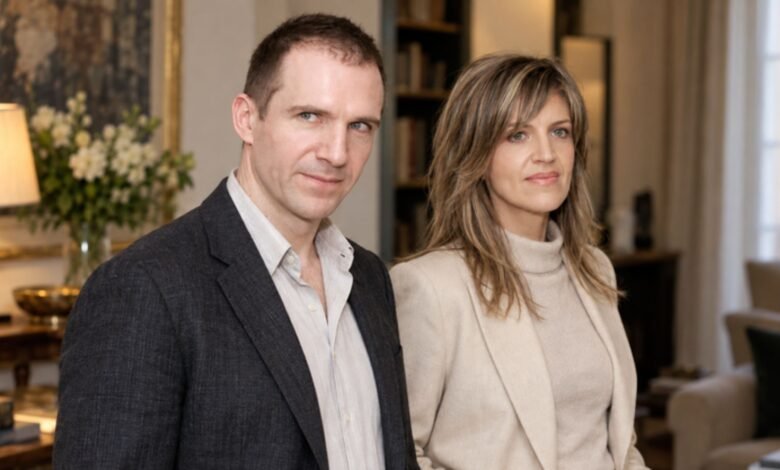
Martha Fiennes has always been easy to introduce with somebody else’s name: Ralph Fiennes’s sister. That description is accurate, but it leaves out the part of her career that has become increasingly important in recent years. Fiennes is a director, writer, producer and digital artist whose work has moved from Onegin and Chromophobia into generative moving-image art.
That distinction matters in 2026. Her name remains attached to one of the better-known sibling collaborations in British cinema, yet her current public profile is increasingly connected to Voewood in Norfolk, her marriage to rare-book dealer Simon Finch, and experimental works such as Yugen and Nativity. A 2026 Tatler feature revisited the couple and their home, while recent cultural programming has continued to position Fiennes as an artist working at the intersection of film, technology and art.
The family connection still draws the search traffic. The career is what gives the biography substance.
BLUF: Martha Fiennes is an English film director, writer, producer, and digital artist best known for directing Onegin (1999) and Chromophobia (2005). She is Ralph Fiennes’s sister, but her career extends into generative film art through Nativity and Yugen, exhibited internationally through 2025.
Martha Fiennes at a glance: the facts behind the Fiennes name
- Full name: Martha Maria Twisleton-Wykeham-Fiennes
- Profession: Film director, writer, producer and digital artist
- Best-known feature films: Onegin and Chromophobia
- Famous family connection: Sister of Ralph Fiennes and Joseph Fiennes; sister of filmmaker Sophie Fiennes and composer Magnus Fiennes
- Children: Three, including actor Hero Fiennes Tiffin
- Major film recognition: Onegin won Fiennes the Best Director Award at the 1999 Tokyo International Film Festival and was nominated for BAFTA’s Alexander Korda Award for Outstanding British Film
- Digital-art works: Nativity (2011) and Yugen (2018)
- Current public base: Voewood, Norfolk, shared with Simon Finch
One biographical detail needs an explicit warning. Public sources do not agree completely on Fiennes’s birth information. IMDb gives 5 February 1965, London, while other reference records give 5 February 1964 and identify Suffolk as her birthplace. Because the underlying authoritative record is inconsistent, an exact age or birth location should not be presented as settled fact.
The family that made creativity feel ordinary
Martha Fiennes was born into a family in which creative work was not an unusual career choice. Her father, Mark Fiennes, was a photographer and her mother, Jennifer Lash, was a novelist and painter. She grew up as one of six siblings, alongside Ralph Fiennes, Joseph Fiennes, Magnus Fiennes, Sophie Fiennes and Jacob Fiennes.
That family structure helps explain why the later Fiennes film collaborations were so unusual. Ralph became one of Britain’s leading actors. Joseph pursued acting. Magnus became a composer. Sophie established herself as a documentary filmmaker. Martha took the director’s chair. Rather than one performer dominating a family of non-artists, the Fiennes household produced several distinct creative careers.
A 2011 Guardian interview with Martha and Magnus described the pair discussing their upbringing as two of six siblings while focusing on Nativity, Martha’s first digital installation. Their relationship was not simply familial: Magnus composed the music, continuing a pattern that had already appeared in Onegin.
The family resemblance became especially visible through cinema. But the professional division between siblings remained important. Martha did not become Ralph Fiennes the director; she became Martha Fiennes the filmmaker.
Before Onegin, there was a career behind the camera
Martha Fiennes’s route into feature filmmaking did not begin with a screenplay dropped onto a studio desk. According to the Cannes Immersive Competition biography, she began by directing music videos, including work associated with Al Green and Boy George, before moving into high-end television commercials.
That background matters because it helps explain the visual confidence visible in her later work. Music videos require compression, rhythm and visual storytelling without conventional narrative exposition. Advertising demands precise control over images, performance and production design. Those skills could then be carried into feature cinema and, later, into non-linear digital art.
By the early 1990s, the more ambitious idea was already taking shape.
Ralph Fiennes had encountered Aleksandr Pushkin’s Eugene Onegin while studying at drama school. In 1992, according to a contemporary Los Angeles Times account, he suggested to Martha that the poem could become a film. She read it, agreed, and the siblings began pursuing the project. It would take about seven years to reach the screen.
That extended gestation is one of the most revealing facts about Onegin. It was not a vanity project assembled quickly because two famous siblings had access to financing. It was a long development process involving literary adaptation, financing, casting and production decisions.
Onegin turned “Ralph Fiennes’s sister” into an award-winning director
Released in 1999, Onegin gave Martha Fiennes one of the strongest possible introductions to feature directing.
The film adapted Pushkin’s verse novel and starred Ralph Fiennes as Yevgeny Onegin, with Liv Tyler as Tatyana, Toby Stephens as Lensky and Lena Headey as Olga. The BFI and AFI both credit Martha Fiennes as director. AFI also records Magnus Fiennes as the composer, making the production another substantial example of the family’s creative overlap.
The film was not universally embraced by critics, but Fiennes’s direction received serious industry recognition. At the 1999 Tokyo International Film Festival, she won the Best Director Award. The official festival history records the award directly under Fiennes and Onegin.
The film was also nominated for the Alexander Korda Award for Outstanding British Film at the 2000 BAFTAs, with Martha Fiennes, Ileen Maisel and Simon Bosanquet listed among the nominees.
The London Critics Circle also recognised her with the British Newcomer of the Year award, giving the debut another major marker of professional credibility. Christie’s later profile of Fiennes records both that honour and her Tokyo Best Director win.
What the film reveals about Martha’s directing style
Contemporary reporting noticed that Fiennes was comfortable using faces, framing and silence as dramatic material. A 1999 Guardian review specifically highlighted the way her camera handled Ralph Fiennes’s performance, particularly in close-up, while also praising the film’s visual treatment of emotional isolation.
That observation is useful because it points toward something that later became even more pronounced in her digital work: Fiennes has consistently treated the moving image as something larger than dialogue and plot.
Her own contemporary comments about Onegin also reveal what attracted her to the source. She described its central subject in terms of human behaviour, love and psychological contradiction rather than simply as a costume romance.
The long wait after Onegin was part of the story
Fiennes did not immediately follow Onegin with a string of studio films.
By the time Chromophobia arrived in 2005, she was candid about how difficult it had been to assemble another feature. In a 2005 Guardian interview, she discussed financing, the expectations of investors and the difficulty of finding the right combination of project, cast and backing.
Chromophobia was a major production in scope. The cast included Kristin Scott Thomas, Penélope Cruz, Ralph Fiennes, Rhys Ifans, Ian Holm, Ben Chaplin and Harriet Walter. Cannes selected the film as its 2005 closing film, shown Out of Competition. The festival describes it as a 133-minute British production directed by Fiennes.
The film’s subject was very different from Onegin. Instead of Pushkin’s 19th-century Russia, Fiennes turned toward interconnected lives in contemporary London, examining wealth, status, family pressure, social performance and emotional emptiness. Cannes’s synopsis centres on secrets and competing relationships inside an affluent family structure.
It also preserved the Fiennes family connection. Ralph appeared in the cast, continuing the siblings’ professional partnership.
But Chromophobia was not simply “another Fiennes family film.” Martha wrote and directed it, establishing a second substantial feature in which her own authorship was central. Cannes continues to list her as the director of the film.
Martha Fiennes’s filmography has a second chapter most people miss
The most interesting turn in her career came after the two feature films.
Beginning in 2011, Fiennes started developing what Cannes describes as a hybrid form of filmmaking combining studio-shot material, digital environments and generative technology. Her first major work in that approach was ** Nativity **.
Nativity was unveiled in London in 2011 and subsequently exhibited at institutions including the National Gallery and the Victoria and Albert Museum, with later international presentations. The project used Fiennes’s proprietary SLOimage system to construct moving images that could change rather than play identically from beginning to end.
The technology was not added simply to make the work look futuristic. Its purpose was structural.
Instead of fixing every edit in advance, the system determines combinations of filmed gestures, backgrounds and transitions in real time. The result is closer to an evolving visual environment than a conventional movie. The Coronet Theatre describes the works as continually changing experiences in which no image is repeated in the same way.
Yugen pushed the idea further
Fiennes’s ** Yugen ** arrived in 2018 and starred Salma Hayek Pinault. It expanded her generative approach through filmed performances, digital environments and real-time systems that influence the sequence of images.
The work premiered at the Venice Film Festival in 2018, was subsequently shown at the Serpentine Gallery in London and at LACMA in Los Angeles.
The conceptual ambition was also broader than conventional film storytelling. Fiennes has spoken about consciousness, dreams, archetypes and the possibility of realities that sit beyond ordinary perception. In discussing Yugen, she said:
“I’ve always been drawn to the idea of extended levels of consciousness.”
That sentence helps explain the logic behind the technology. For Fiennes, unpredictability is not merely a technical effect. It becomes part of the meaning.
2025 brought her experimental work back into the centre of London
The clearest recent public showcase of this second career chapter came in February 2025, when the Coronet Theatre presented Yugen and Nativity together in London. The exhibition placed constantly evolving moving images onto large screens, allowing visitors to watch for minutes or hours rather than entering at a fixed start time.
The Coronet’s accompanying programme described Fiennes’s work as sitting between film, visual art and technology. A separate conversation explored AI, philosophy, consciousness, coding and digital systems, with Fiennes discussing the relationship between artistic control and machine-generated change.
The work also returned attention to the Fiennes family collaboration. Magnus Fiennes composed and produced the scores for the pieces, continuing a creative partnership that stretches back to Onegin and Nativity.
For audiences who knew Martha mainly through Ralph, this later work provides a very different picture. She is not simply a director who made two period-oriented or prestige films. She has spent more than a decade asking whether the basic grammar of cinema—shot, cut, repeat, linear sequence—can be changed.
Why the “female director” label never sat comfortably with her
Fiennes has spoken openly about gender without wanting it to become the headline of her identity.
In a 2016 Standard interview, she questioned the habit of calling women “female directors,” arguing that the label could become a category imposed on the artist rather than a description of the work. At the same time, she acknowledged that the historical imbalance within filmmaking could still affect how projects by women were received and funded.
Her position was nuanced rather than dismissive. She did not deny structural problems; she resisted allowing them to define her creative identity.
That perspective is particularly interesting when compared with the difficulties she described in getting Chromophobia financed. Her comments about investors, familiar commercial formulas and the challenge of securing support suggest that the problem was never simply about directing a film. It was also about persuading people that an unusual idea deserved to exist at feature scale.
This tension continues in her digital work. Generative art is difficult to classify commercially because it does not behave like a standard movie, gallery painting or software product. Fiennes has spent years working precisely inside that gap.
Ralph Fiennes is central to the story—but not the whole story
The strongest Ralph-Martha connection remains Onegin.
Ralph did not merely appear in his sister’s directorial debut. He helped initiate the project, starred in the title role and served as an executive producer. Their brother Magnus created the music.
The collaboration appears to have been unusually disciplined. A 1999 Guardian account described the siblings as respectful of one another during production, with the family relationship deliberately kept from becoming an excuse for unprofessional conduct.
That matters because celebrity-family stories often flatten professional collaboration into nepotism. The record around Onegin is more complicated. Ralph brought star power and an existing attachment to Pushkin’s novel, but Martha was the director responsible for the visual construction of the film, and the project itself took years to assemble. Her subsequent awards confirm that the industry treated her as a director in her own right.
Martha Fiennes’s children extend the family’s screen connection
Fiennes has three children, including actor Hero Fiennes Tiffin, her son with cinematographer George Tiffin.
Hero later became known for playing the young Tom Riddle in Harry Potter and the Half-Blood Prince and for starring as Hardin Scott in the After films. That produced one of the more striking generational connections in the family: Hero portrayed a younger version of the character played by his uncle Ralph Fiennes, who played Lord Voldemort in the Harry Potter films.
Importantly, Hero has said the famous family did not automatically determine his career. In a recent People interview, he described Ralph and Joseph more as his uncles than distant celebrity figures and discussed the pressure he sometimes felt while working within a family full of experienced performers.
Fiennes’s family life therefore intersects with the entertainment industry in several directions, but the available record still points toward distinct careers rather than one centrally managed family enterprise.
The Voewood chapter changed the shape of her public life
In 2023, Martha Fiennes married Simon Finch, the rare-book dealer associated with Voewood, the Arts and Crafts house in North Norfolk. Tatler later featured the couple and described their wedding celebrations at Voewood in July 2023.
Voewood’s own website currently identifies Simon Finch and Martha Fiennes as the people behind the property and states that they married there. The site presents the house as a venue for weddings, events, retreats and film shoots, while also reflecting the couple’s interest in art, architecture and creative culture.
A 2026 Tatler feature gives the relationship renewed contemporary context, showing Fiennes not only as a filmmaker but as one of the custodians of a highly individual historic house. That adds another dimension to her public identity: cinema, digital art, architecture, books and domestic creative life now overlap more visibly than they did during the Onegin era.
Martha Fiennes’s career timeline, from music videos to generative cinema
| Year | Milestone | What the record shows |
|---|---|---|
| Early career | Music videos and commercials | Directed music videos for artists including Al Green and Boy George before moving into high-end advertising |
| 1992 | Onegin concept begins | Ralph Fiennes suggested adapting Pushkin’s Eugene Onegin to Martha |
| 1999 | Onegin released | Martha Fiennes directed Ralph Fiennes, Liv Tyler and Toby Stephens |
| 1999 | Tokyo International Film Festival | Won Best Director for Onegin |
| 2000 | BAFTA recognition | Onegin nominated for Outstanding British Film |
| 2005 | Chromophobia | Second feature; selected as Cannes closing film, Out of Competition |
| 2011 | Nativity | First major generative digital artwork using Fiennes’s evolving image system |
| 2018 | Yugen | Generative artwork starring Salma Hayek Pinault; premiered in Venice |
| 2023 | Marriage to Simon Finch | Wedding celebrations held at Voewood in Norfolk |
| 2025 | Yugen and Nativity in London | Both works presented at The Coronet Theatre in February |
| 2026 | Renewed public profile | Tatler revisits Fiennes and Finch at Voewood; her artistic work remains part of current cultural discussion |
The financial record does not justify a precise personal fortune
There is no authoritative, independently verified public figure establishing Martha Fiennes’s personal net worth.
Entertainment websites frequently publish numerical estimates for celebrities, but a number without documented assets, company filings, property disclosures, investment records or other reliable financial evidence is not a defensible valuation. The sources reviewed for this profile do not establish such a figure.
Her career clearly includes substantial professional work across feature films, advertising, digital art, exhibitions and industry activities, while her current life also includes Voewood. But those facts do not provide enough information to calculate personal wealth.
The responsible position is therefore simple: Martha Fiennes’s personal net worth is currently unverified.
That is preferable to presenting a speculative internet estimate as a financial fact.
People Also Ask about Martha Fiennes
Who is Martha Fiennes?
Martha Fiennes is an English film director, writer, producer and digital artist. She made her feature-directing debut with Onegin in 1999, starring her brother Ralph Fiennes, and later directed Chromophobia in 2005. She subsequently developed generative moving-image works including Nativity and Yugen, extending her career beyond conventional feature filmmaking.
Is Martha Fiennes Ralph Fiennes’s sister?
Yes. Martha Fiennes is Ralph Fiennes’s sister. They collaborated on Onegin, with Ralph starring as Yevgeny Onegin and Martha directing. Their brother Magnus Fiennes also composed the film’s music. Martha’s other siblings include actor Joseph Fiennes, filmmaker Sophie Fiennes and composer Magnus Fiennes.
What movies did Martha Fiennes direct?
Martha Fiennes directed Onegin and Chromophobia. Onegin, released in 1999, starred Ralph Fiennes, Liv Tyler and Toby Stephens and earned Fiennes the 1999 Tokyo International Film Festival Best Director Award. Chromophobia, released in 2005, starred Kristin Scott Thomas, Penélope Cruz and Ralph Fiennes and closed that year’s Cannes Film Festival.
Who is Martha Fiennes married to?
Martha Fiennes is married to rare-book dealer Simon Finch. The couple married at Voewood in Norfolk in 2023, and current Voewood material identifies Simon Finch and Martha Fiennes as the home’s custodians. Tatler also profiled the couple together at Voewood in 2026.
Is Hero Fiennes Tiffin Martha Fiennes’s son?
Yes. Hero Fiennes Tiffin is Martha Fiennes’s son. He is an actor known for playing young Tom Riddle in Harry Potter and the Half-Blood Prince and Hardin Scott in the After films. His uncles include Ralph Fiennes and Joseph Fiennes, creating a direct connection between the Fiennes family’s filmmaking and acting careers.
What is Martha Fiennes’s net worth?
Martha Fiennes’s personal net worth is not publicly verified by authoritative financial sources. Her professional record demonstrates a long career across directing, writing, producing and digital art, but there is insufficient transparent financial information to calculate a defensible personal fortune. Exact figures repeated by celebrity-wealth websites should therefore be treated as estimates rather than established facts.
The Family Name Is the Entry Point, Not the Story
Martha Fiennes entered public attention through a famous family, but the most useful way to understand her career is to follow the work rather than the surname.
The evidence forms a clear progression. Music videos and commercials came first. Then Onegin, a seven-year effort born from a conversation with Ralph. Then Chromophobia, which brought her to Cannes. After that came an even more unusual decision: to question the fixed structure of cinema itself.
That second chapter may ultimately be the more revealing one.
Nativity and Yugen are not simply later additions to a filmography. They show Fiennes moving from directing what happens inside the frame to designing systems that influence what happens next. The machine becomes part of the creative process, yet the originating decisions remain recognisably human: performance, image, atmosphere, symbolism and the desire to explore unfamiliar forms of perception.
So yes, Martha Fiennes is Ralph Fiennes’s sister.
But that is the first sentence of her biography, not the last.
Sources & Verification
- Festival de Cannes — Martha Fiennes: official profile covering her work as director, screenwriter and artist, including Chromophobia, Nativity and Yugen. Cannes: Martha Fiennes
- Festival de Cannes — Chromophobia: official film record confirming Fiennes as director and the film’s 2005 closing-film status.
- British Film Institute: film record for Onegin, crediting Martha Fiennes as director.
- The Coronet Theatre: official programme for the 2025 Yugen & Nativity exhibition and Fiennes’s discussion of the work.
- The Guardian: contemporary reporting on Onegin, Martha and Ralph Fiennes, and her later comments on financing Chromophobia.
- The Standard: 2016 interview with Martha Fiennes discussing creative work, film financing and gender in directing.
- Voewood: current first-party material identifying Simon Finch and Martha Fiennes and documenting their life at Voewood.
- Tatler: 2026 feature on Simon Finch and Martha Fiennes at Voewood and their 2023 wedding celebrations.
Editorial Disclaimer: This profile distinguishes established facts from disputed or unavailable information. Martha Fiennes’s birth year and birthplace vary across public reference sources, and no authoritative source reviewed provides a verified personal net-worth figure. Financial estimates, private-life claims and other details without reliable sourcing should not be treated as established fact.


2 Comments